
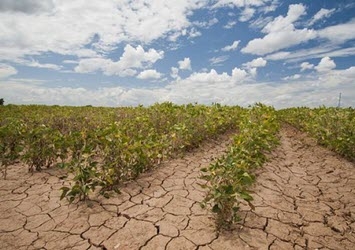
The dryness in Brazil’s soybean production areas is worth watching because there is a history to the situation. There are not the La Niña conditions for a larger adverse impact, but Brazilian soybean yields have historically been lowered when spring rains fail to provide enough moisture. In 2011, La Niña struck South America and the drought in Brazil was said to be worse than the 2008/2009 event. Between mid-December 2011 and early January 2012, the Department of Rural Economy (DERAL) raised the amount of soybeans rated in medium/bad condition from 18 percent to 32 percent, while lowering crops rated in good condition from 82 percent to 68. Yields that growing season fell 15 percent from a year earlier to just 2.6...


 Fabiana is a genus of flowering plants in the nightshade family, native to dry slopes in western South America.[1] They are evergreen shrubs or subshrubs,[1] with needle-like leaves and profuse tiny tubular flowers in summer. The common name is false heath because the leaves superficially resem...


From WPI Consulting
Accountability and a comprehensive approach to export programming

WPI’s team helped construct a strategic approach to develop, implement, and track promotional activities in 8 key regions across the globe for an agricultural export association. With continued progress measurement and strategic advisory services from WPI, the association has seen its ROI from investments in promotional programming increase by 44 percent over the past 5 years. Not only does this type of holistic approach to organizational strategy provide measurable results to track and analyze, it fosters top-down and bottom-up organizational accountability.