
What is Transportation Perspectives? A weekly report that tracks developments in ocean freight rates and U.S. agricultural commodity exports. With nearly two decades of market analysis, it offers global readers unparalleled insights into what was once an opaque industry.
Recent Analysis from Transportation Perspectives

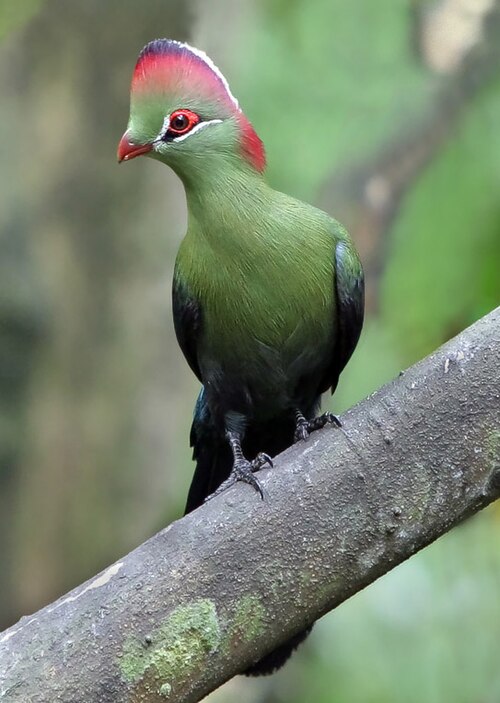
Fischer's turaco
 ZanzibarMnemba Marine Park Mnemba Marine Park is located 10 kilometres (6 mi) from Stone Town and forms part of the northeastern Unguja Island. A marine reserve and atoll, its shallow stretch of coral reef is in the shape of an oval. It is located between Matemwe and Nungwi, which is an importa...


Microlith
 A microlith is a small stone tool usually made of flint or chert and typically several centimeters in length and half a centimetre wide. They were made by humans from at least the Upper Paleolithic, across Africa, Europe, Asia and Australia. The microliths were used in spear points and arrowhea...


 Kiwengwa/Pongwe Forest Reserve Kiwengwa/Pongwe Forest Reserve is located on the northeast coast of Unguja, 20 kilometres (12 mi) from the Town. The reserve is an important biodiversity spot in the coral rag zone. The forest reserve is rich both in faunal and floral species. The faunal species r...

 An Ankylosaurus lumbers along the shore of what’s now eastern Montana. Walking low to the ground, the dino uses its flat, leaf-shaped teeth to tear at ferns lining the water. Suddenly, a shadow looms over the herbivore—a Tyrannosaurus rex is hungry. But Ankylosaurus won’t be a...


 For 23 years, WPI’s monthly AgReview publication has provided in-depth analysis of markets and policy. Responding to changes in both business economics and clients’ needs, this will be our last edition. We will continue to include historical analysis with our successful daily Ag Per...

 WPI's monthly publication features a review of the past month's market and policy analysis articles. This month we examine the impacts of climate change, competition in the oilseeds market, the outlook of the meat industry, policies surrounding the Renewable Fuel Standards under the Biden Admin...


 The Hoffmann's two-toed sloth (Choloepus hoffmanni), also known as the northern two-toed sloth, is a species of sloth from Central and South America. It is a solitary, largely nocturnal and arboreal animal, found in mature and secondary rainforests and deciduous forests. The common name commemo...
 Dasypus bellus, the beautiful armadillo,[2] is an extinct armadillo species endemic to North America and South America from the Pleistocene, living from 1.8 mya—11,000 years ago, existing for approximately 1.789 million years.[3] Slightly larger than its living relative, the nine-b...
 The southern cassowary (Casuarius casuarius), also known as double-wattled cassowary, Australian cassowary, or two-wattled cassowary, is a large, flightless, mostly black bird, found in Indonesia, Papua New Guinea, and northeastern Australia. It is one of the three living species of cassowary,...

 content here...