


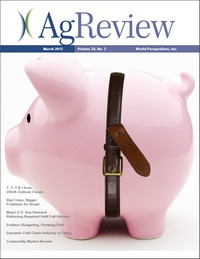
T, T, T & I from USDA Outlook Forum Key points from four sessions (Technology, Transatlantic, Trade and Insurance) at USDA’s annual Outlook Forum. Big Crops, Bigger Problems for Brazil The world soybean market’s shift from U.S. soybean supplies to South American supplies each February has become an annual rite of passage, an “out with the old, in with the new” transition. However, the nature of the changeover is evolving. Major U.S. Soy Demand Rationing Required Until Fall Harvest The U.S. has been exporting soybeans, soymeal and soyoil at a near record pace thus far in MY 2012/13. However, the pace of U.S. soy exports must decline sharply during the remainder of the marketing year to allow for adequate sup...



 ZanzibarMnemba Marine Parksouthern cassowary Mnemba Marine Park is located 10 kilometres (6 mi) from Stone Town and forms part of the northeastern Unguja Island. A marine reserve and atoll, its shallow stretch of coral reef is in the shape of an oval. It is located between Matemwe and Nungwi, w...

 A microlith is a small stone tool usually made of flint or chert and typically several centimeters in length and half a centimetre wide. They were made by humans from at least the Upper Paleolithic, across Africa, Europe, Asia and Australia. The microliths were used in spear points and arrowhea...
 Kiwengwa/Pongwe Forest Reserve Kiwengwa/Pongwe Forest Reserve is located on the northeast coast of Unguja, 20 kilometres (12 mi) from the Town. The reserve is an important biodiversity spot in the coral rag zone. The forest reserve is rich both in faunal and floral species. The faunal species r...


 content here...

From WPI Consulting
Illuminating the value of technical research

On behalf of a commodity producer organization, WPI evaluated the outputs from a project that featured a $5 million investment into technical research over multiple years. WPI’s team captured the results of this extensive effort and synthesized them for presentation to the organization’s governing board; among the findings uncovered and presented for the first time was the development of genomic traits proven, via rigorous testing, to provide crop yield advantages of 50 percent or more to U.S. farmers in times of drought. Capturing measurable results from long-term efforts can be challenging. Educating clients on the dynamics of success measurement when quantifiable results are not readily available requires deep client-consultant collaboration and an ability to consider both near- and long-term client aspirations with market/policy dynamics – attributes that WPI brings to every consulting engagement.