
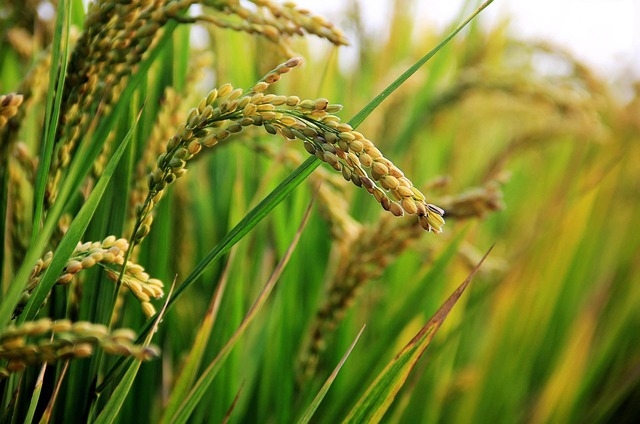
Asian leaders gather this Sunday to hopefully put the final touches on a trade agreement called the Regional Comprehensive Economic Partnership (RCEP). The negotiations have taken eight years and, as usual, the word comprehensive does not apply to agriculture. Likely exempt from tariff reductions or elimination are products like sugar, rice, beef, pork, and dairy. Except for rice, imports as a share of production of these goods in East Asia already runs much higher than in North America. Increasing dependency is too politically sensitive for many of the participants. The value of rice is three times greater in Brunei, Japan, and South Korea relative to Vietnam, Malaysia, and Thailand. Yet because of higher trade volumes, reducing bor...



 A microlith is a small stone tool usually made of flint or chert and typically several centimeters in length and half a centimetre wide. They were made by humans from at least the Upper Paleolithic, across Africa, Europe, Asia and Australia. The microliths were used in spear points and arrowhea...


 The magpie goose (Anseranas semipalmata) is the sole living representative species of the family Anseranatidae. This waterbird is found in northern Australia and southern New Guinea.[2] The species is not truly migratory but it sometimes travels large distances to find food and water, especiall...

 Lobelia (/loʊˈbiːliə, lə-/[4][5][6]) is a genus of flowering plants in the family Campanulaceae comprising 415 species,[7] with a subcosmopolitan distribution primarily in tropical to warm temperate regions of the world, a few species extending into cooler temperate regions.[8] They are known g...

From WPI Consulting
Forecasting developments in production agriculture
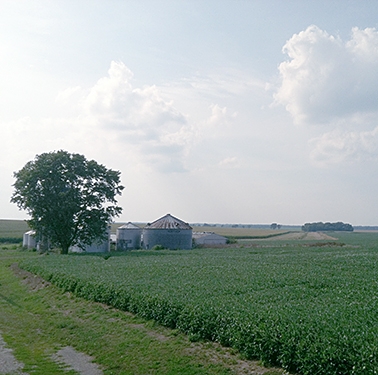
On behalf of a private U.S. agricultural technology provider, WPI’s team generated an econometric model to forecast the movement of concentrated corn production north and west from the traditional U.S. Corn Belt. WPI’s model has subsequently provided quantitative support to a multi-million-dollar investment into short-season corn variety development. WPI’s methodology included a series of interviews with regional grain elevators and seed consultants. Emphasizing outreach and communication with stakeholders who possess intimate sectoral knowledge – on-the-ground insights – is a regular component of WPI’s methodologies, made possible by WPI’s ever-growing network of industry contacts.