
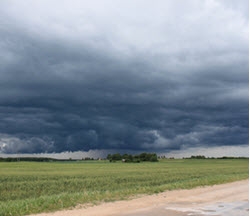
GOOD MORNING, Prices started the session lower as the rainfall prospects across the Plains forecast for this weekend trumped the 10th day of active bean business announcements. Farmers need to see one or two more good rains to finish off crops and are monitoring this system closely. Spreads are slightly weaker as we draw ever closer to harvest. A weakening domestic bean basis weighs on the spreads and futures. Corn struggles as traders want to see evidence of more business. Wheat prices are lower with Egypt buying from Romania and Ukraine yesterday. Egypt tenders for 30,000 mt of soyoil. High quality wheat remains in big demand. Once again weaker soyoil futures pressured beans, a...


 Kiwengwa/Pongwe Forest Reserve Kiwengwa/Pongwe Forest Reserve is located on the northeast coast of Unguja, 20 kilometres (12 mi) from the Town. The reserve is an important biodiversity spot in the coral rag zone. The forest reserve is rich both in faunal and floral species. The faunal species r...

 A pika (/ˈpaɪkə, ˈpiːkə/ PY-kə, PEE-kə[3][4]) is a small, mountain-dwelling mammal native to Asia and North America. With short limbs, a very round body, an even coat of fur, and no external tail, they resemble their close relative the rabbit, but with short, rounded ears.[5] The large-eared pi...


 Lobelia (/loʊˈbiːliə, lə-/[4][5][6]) is a genus of flowering plants in the family Campanulaceae comprising 415 species,[7] with a subcosmopolitan distribution primarily in tropical to warm temperate regions of the world, a few species extending into cooler temperate regions.[8] They are known g...
 The Olympic marmot (Marmota olympus) is a rodent in the squirrel family, Sciuridae. It occurs only in the U.S. state of Washington, at the middle elevations of the Olympic Peninsula. The closest relatives of this species are the hoary marmot and the Vancouver Island marmot. In 2009, it was decl...

From WPI Consulting
Like all marmots
An adult Vancouver Island marmot typically measures 65 to 70 centimetres (26 to 28 in) from the tip of its nose to the tip of its tail.