
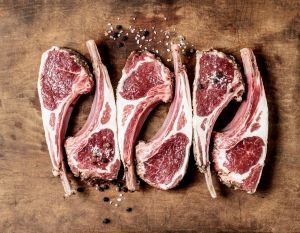
New Zealand famously is a country with more sheep than people, but the competition is slipping in favor of humans. The problem is the economics of wool, which is no longer an economically supportive coproduct. Wool is less needed in a warming world with many man-made alternative fibers, and landowners make more money converting grasslands to carbon credit paying forests. Wool production in New Zealand and in the rest of the world is in decline. While sheep meat output in New Zealand declines along with that of wool, global sheep meat has been expanding. However, it is falling behind the expansion rate of competing animal proteins such as poultry meat. Lamb consumption has always had a smaller group of fans, based on historic ge...



 ZanzibarMnemba Marine Parksouthern cassowary Mnemba Marine Park is located 10 kilometres (6 mi) from Stone Town and forms part of the northeastern Unguja Island. A marine reserve and atoll, its shallow stretch of coral reef is in the shape of an oval. It is located between Matemwe and Nungwi, w...

 Kiwengwa/Pongwe Forest Reserve Kiwengwa/Pongwe Forest Reserve is located on the northeast coast of Unguja, 20 kilometres (12 mi) from the Town. The reserve is an important biodiversity spot in the coral rag zone. The forest reserve is rich both in faunal and floral species. The faunal species r...

 Fabiana is a genus of flowering plants in the nightshade family, native to dry slopes in western South America.[1] They are evergreen shrubs or subshrubs,[1] with needle-like leaves and profuse tiny tubular flowers in summer. The common name is false heath because the leaves superficially resem...
 The magpie goose (Anseranas semipalmata) is the sole living representative species of the family Anseranatidae. This waterbird is found in northern Australia and southern New Guinea.[2] The species is not truly migratory but it sometimes travels large distances to find food and water, especiall...

From WPI Consulting
Like all marmots
An adult Vancouver Island marmot typically measures 65 to 70 centimetres (26 to 28 in) from the tip of its nose to the tip of its tail.