

Today’s announcement included news that the CME will add a seasonal discount on live cattle tendered to one delivery location for the October contract (only) as well as details regarding changes to contract specifications for par quality grades.The CME today announced further steps to enhance its livestock markets. As previously reported here, volatility in the Live Cattle futures market during 2015 highlighted certain producer groups’ concerns and led to calls for a structural review of trading rules and procedures. CME President Terrence Duffy had addressed the National Cattlemen’s Beef Association (NCBA) meeting in January 2016 regarding the matter and announced that Live Cattle futures would be added to CME’s Globex Messaging Efficiency...



 content here...
 The magpie goose (Anseranas semipalmata) is the sole living representative species of the family Anseranatidae. This waterbird is found in northern Australia and southern New Guinea.[2] The species is not truly migratory but it sometimes travels large distances to find food and water, especiall...
 The common ostrich (Struthio camelus), or simply ostrich, is a species of flightless bird native to certain areas of Africa (and historically, Arabia) and is the largest living species of bird. The common ostrich is one of two extant species of ostriches, the only living members of the genus St...
 A pika (/ˈpaɪkə, ˈpiːkə/ PY-kə, PEE-kə[3][4]) is a small, mountain-dwelling mammal native to Asia and North America. With short limbs, a very round body, an even coat of fur, and no external tail, they resemble their close relative the rabbit, but with short, rounded ears.[5] The large-eared pi...

From WPI Consulting
Infrastructure investment due diligence
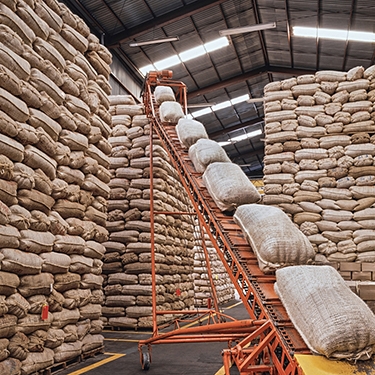
On behalf of a Canadian oilseed processer WPI's team provided market analysis, econometric modeling and financial due diligence in support of a $24 million-dollar investment in a Ukrainian crush plant. Consistent with WPI's findings, local production to supply the plant and the facility's output have expanded exponentially since the investment. WPI has conducted parallel work on behalf of U.S., South American and European clients, both private and public, in the agri-food space.