Conglomerate Vision Agribusinesses are paying attention. They along with oil companies are being blamed for inflation via gouging. There is an effort to ramp up the trustbusters, provide taxpayer incubator funds (subsidies) for startup competitors, and now even invoke the war-time Defense Production Act to show action on making baby formula. Noting that 40 percent of U.S. baby formula was made by one plant in Michigan with a still yet to be determined problem for its shutdown, it is used as another example of why big is bad. Politicians not economists interpret that having 10 separate plants each making 10-percent of baby formula would somehow add competition and supply chain resiliency. Some of this reputation for big is bad is ear...



 content here...

 A pika (/ˈpaɪkə, ˈpiːkə/ PY-kə, PEE-kə[3][4]) is a small, mountain-dwelling mammal native to Asia and North America. With short limbs, a very round body, an even coat of fur, and no external tail, they resemble their close relative the rabbit, but with short, rounded ears.[5] The large-eared pi...
 Gloriosa is a genus of 12 species in the plant family Colchicaceae, and includes the formerly recognised genus Littonia. They are native in tropical and southern Africa to Asia, and naturalised in Australia and the Pacific as well as being widely cultivated.[3] The most common English names are...
 Lobelia (/loʊˈbiːliə, lə-/[4][5][6]) is a genus of flowering plants in the family Campanulaceae comprising 415 species,[7] with a subcosmopolitan distribution primarily in tropical to warm temperate regions of the world, a few species extending into cooler temperate regions.[8] They are known g...

From WPI Consulting
Infrastructure investment due diligence
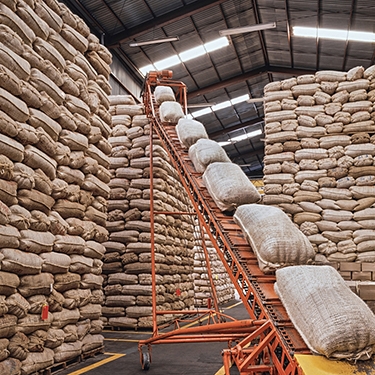
On behalf of a Canadian oilseed processer WPI's team provided market analysis, econometric modeling and financial due diligence in support of a $24 million-dollar investment in a Ukrainian crush plant. Consistent with WPI's findings, local production to supply the plant and the facility's output have expanded exponentially since the investment. WPI has conducted parallel work on behalf of U.S., South American and European clients, both private and public, in the agri-food space.