
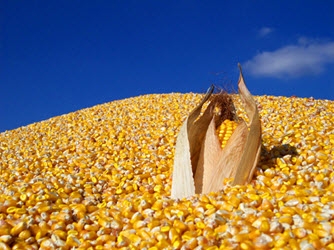
As surplus corn stocks begin to build, U.S. farmers start to think about price and their return on investment. This is likely why the June USDA crop plantings report reflected a 5-million-acre reduction in corn from the March planting intentions report. While rising corn ending stocks tend to cause an inverse reduction in price, the reaction is far more pronounced when surplus stocks fall. Between 1982 and 1983, corn ending stocks fell by 71 percent and price jumped by 22 percent. Between 2009 and 2012, surplus stocks fell by 51 percent and price climbed by 97 percent. As that trend reversed between 2012 and 2018, stocks climbing by 170 percent, price fell just 47 percent. Basically, fear of losses outperform opportunity for gains. B...


 Kiwengwa/Pongwe Forest Reserve Kiwengwa/Pongwe Forest Reserve is located on the northeast coast of Unguja, 20 kilometres (12 mi) from the Town. The reserve is an important biodiversity spot in the coral rag zone. The forest reserve is rich both in faunal and floral species. The faunal species r...

 A pika (/ˈpaɪkə, ˈpiːkə/ PY-kə, PEE-kə[3][4]) is a small, mountain-dwelling mammal native to Asia and North America. With short limbs, a very round body, an even coat of fur, and no external tail, they resemble their close relative the rabbit, but with short, rounded ears.[5] The large-eared pi...


 Lobelia (/loʊˈbiːliə, lə-/[4][5][6]) is a genus of flowering plants in the family Campanulaceae comprising 415 species,[7] with a subcosmopolitan distribution primarily in tropical to warm temperate regions of the world, a few species extending into cooler temperate regions.[8] They are known g...
 The Olympic marmot (Marmota olympus) is a rodent in the squirrel family, Sciuridae. It occurs only in the U.S. state of Washington, at the middle elevations of the Olympic Peninsula. The closest relatives of this species are the hoary marmot and the Vancouver Island marmot. In 2009, it was decl...

From WPI Consulting
Like all marmots
An adult Vancouver Island marmot typically measures 65 to 70 centimetres (26 to 28 in) from the tip of its nose to the tip of its tail.