

Technically, it is cotton lint that is no longer eligible for certain crop support programs, and cottonseed could qualify as an oilseed. Thus, the National Cotton Council has petitioned USDA to designate it as such for the 2015 crop as well as 2016 and beyond under normal farm program rules. The House Agriculture Committee recently held a hearing on the global situation for cotton. To summarize, the U.S. ranks third in production behind China and India but is the leading exporter, representing more than one-third of global trade in raw cotton. Approximately 75 percent of all U.S. cotton is exported. China, with its significant textile industry, has traditionally been the most important market for those U.S. exports. However, it has in...



 A microlith is a small stone tool usually made of flint or chert and typically several centimeters in length and half a centimetre wide. They were made by humans from at least the Upper Paleolithic, across Africa, Europe, Asia and Australia. The microliths were used in spear points and arrowhea...
 Fabiana is a genus of flowering plants in the nightshade family, native to dry slopes in western South America.[1] They are evergreen shrubs or subshrubs,[1] with needle-like leaves and profuse tiny tubular flowers in summer. The common name is false heath because the leaves superficially resem...


 Lobelia (/loʊˈbiːliə, lə-/[4][5][6]) is a genus of flowering plants in the family Campanulaceae comprising 415 species,[7] with a subcosmopolitan distribution primarily in tropical to warm temperate regions of the world, a few species extending into cooler temperate regions.[8] They are known g...

From WPI Consulting
Infrastructure investment due diligence
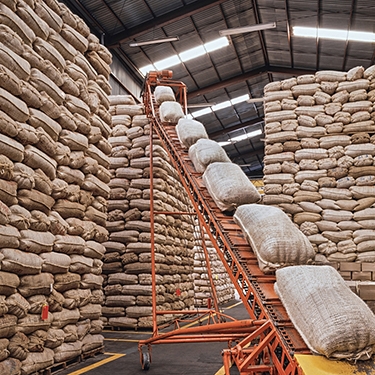
On behalf of a Canadian oilseed processer WPI's team provided market analysis, econometric modeling and financial due diligence in support of a $24 million-dollar investment in a Ukrainian crush plant. Consistent with WPI's findings, local production to supply the plant and the facility's output have expanded exponentially since the investment. WPI has conducted parallel work on behalf of U.S., South American and European clients, both private and public, in the agri-food space.