


The underlying fundamental issue with crop insurance is its actuarial soundness, and gaining higher levels of coverage through premium subsidies has been a key leveraging tool to bring more acres with better actuarial histories into the program.As commodity markets went on a multi-year bull run over the past few years, crop insurance costs grew accordingly, exceeding $8 billion. Together with the 2011 renegotiation of the Standard Reinsurance Agreement, this brought new attention to the federal crop insurance program and the various subsidies imbedded in it. While the agriculture sector rallied around crop insurance as the new, primary risk management tool in the last farm bill debate, outside factions that included budget hawk public...



 A microlith is a small stone tool usually made of flint or chert and typically several centimeters in length and half a centimetre wide. They were made by humans from at least the Upper Paleolithic, across Africa, Europe, Asia and Australia. The microliths were used in spear points and arrowhea...


 content here...
 The magpie goose (Anseranas semipalmata) is the sole living representative species of the family Anseranatidae. This waterbird is found in northern Australia and southern New Guinea.[2] The species is not truly migratory but it sometimes travels large distances to find food and water, especiall...
 The common ostrich (Struthio camelus), or simply ostrich, is a species of flightless bird native to certain areas of Africa (and historically, Arabia) and is the largest living species of bird. The common ostrich is one of two extant species of ostriches, the only living members of the genus St...

From WPI Consulting
Forecasting developments in production agriculture
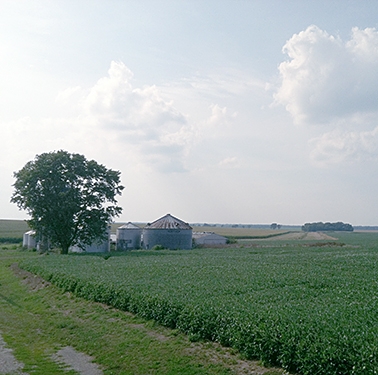
On behalf of a private U.S. agricultural technology provider, WPI’s team generated an econometric model to forecast the movement of concentrated corn production north and west from the traditional U.S. Corn Belt. WPI’s model has subsequently provided quantitative support to a multi-million-dollar investment into short-season corn variety development. WPI’s methodology included a series of interviews with regional grain elevators and seed consultants. Emphasizing outreach and communication with stakeholders who possess intimate sectoral knowledge – on-the-ground insights – is a regular component of WPI’s methodologies, made possible by WPI’s ever-growing network of industry contacts.