


Since commodity prices have moved up and down in a cyclical fashion as long as prices have been recorded, there has developed a cottage industry of economists and analysts who attempt to fit those cycles into patterns.It is axiomatic to say that prices for freely-traded raw material commodities move up and down in cycles that tend to reflect changing relationships between available supplies and demand. After all, the best cure for high prices or low prices is respectively high prices and low prices, to paraphrase one of our favorite market-related sayings.The ability of price movements to stimulate or restrict production and encourage or discourage demand for freely-traded commodities is the single most important fundamental factor in the w...



 A microlith is a small stone tool usually made of flint or chert and typically several centimeters in length and half a centimetre wide. They were made by humans from at least the Upper Paleolithic, across Africa, Europe, Asia and Australia. The microliths were used in spear points and arrowhea...
 Fabiana is a genus of flowering plants in the nightshade family, native to dry slopes in western South America.[1] They are evergreen shrubs or subshrubs,[1] with needle-like leaves and profuse tiny tubular flowers in summer. The common name is false heath because the leaves superficially resem...
 An Ankylosaurus lumbers along the shore of what’s now eastern Montana. Walking low to the ground, the dino uses its flat, leaf-shaped teeth to tear at ferns lining the water. Suddenly, a shadow looms over the herbivore—a Tyrannosaurus rex is hungry. But Ankylosaurus won’t be a...

 The magpie goose (Anseranas semipalmata) is the sole living representative species of the family Anseranatidae. This waterbird is found in northern Australia and southern New Guinea.[2] The species is not truly migratory but it sometimes travels large distances to find food and water, especiall...

From WPI Consulting
Infrastructure investment due diligence
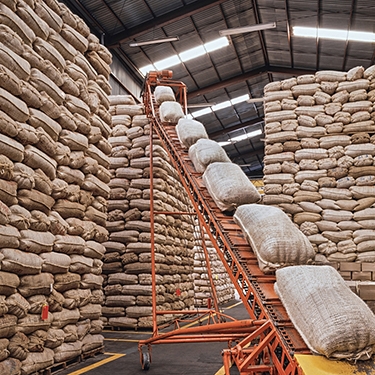
On behalf of a Canadian oilseed processer WPI's team provided market analysis, econometric modeling and financial due diligence in support of a $24 million-dollar investment in a Ukrainian crush plant. Consistent with WPI's findings, local production to supply the plant and the facility's output have expanded exponentially since the investment. WPI has conducted parallel work on behalf of U.S., South American and European clients, both private and public, in the agri-food space.