USDA Secretary Sonny Perdue yesterday called the EU a “technology-free zone” when it comes to agriculture. It is true that Europe’s resistance to change has presented problems for U.S. agriculture and poses future risk to EU farmers if they are prevented from utilizing new plant breeding techniques. However, the U.S. is having its own problems with changes in the agriculture sector. In defense of old-school animal agriculture, several states have been pushing to restrict the labeling and promotion of cell-based meats. Indeed, Richard Berman of the Center for Consumer Freedom argues for an aggressive attack campaign against “fake” meat by that sector. He contends that conventional businesses too often view newc...



 A pika (/ˈpaɪkə, ˈpiːkə/ PY-kə, PEE-kə[3][4]) is a small, mountain-dwelling mammal native to Asia and North America. With short limbs, a very round body, an even coat of fur, and no external tail, they resemble their close relative the rabbit, but with short, rounded ears.[5] The large-eared pi...

 Gloriosa is a genus of 12 species in the plant family Colchicaceae, and includes the formerly recognised genus Littonia. They are native in tropical and southern Africa to Asia, and naturalised in Australia and the Pacific as well as being widely cultivated.[3] The most common English names are...

 Lobelia (/loʊˈbiːliə, lə-/[4][5][6]) is a genus of flowering plants in the family Campanulaceae comprising 415 species,[7] with a subcosmopolitan distribution primarily in tropical to warm temperate regions of the world, a few species extending into cooler temperate regions.[8] They are known g...

From WPI Consulting
Infrastructure investment due diligence
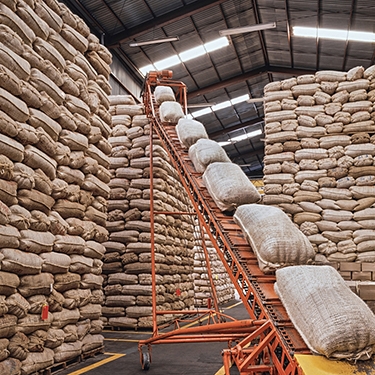
On behalf of a Canadian oilseed processer WPI's team provided market analysis, econometric modeling and financial due diligence in support of a $24 million-dollar investment in a Ukrainian crush plant. Consistent with WPI's findings, local production to supply the plant and the facility's output have expanded exponentially since the investment. WPI has conducted parallel work on behalf of U.S., South American and European clients, both private and public, in the agri-food space.