
Kim Jong-Un doesn’t place much faith in capitalism or markets, but those markets’ performance this week indicate their own view of North Korea’s emerging nuclear capability.Last Saturday the U.N. Security Council unanimously imposed sanctions on North Korea over its continued nuclear missile testing. Under the plan, it may no longer export coal, iron, iron ore, lead, lead ore or seafood. The country must also refrain from deals that have North Koreans sent to other countries to provide labor. In a very significant break with its own foreign policy, China (North Korea’s biggest trading partner) joined in supporting the resolution.Moreover, this past week’s heated rhetoric from North Korea and its leader Kim Jong Un (i.e., threats to strike t...



 content here...

 The magpie goose (Anseranas semipalmata) is the sole living representative species of the family Anseranatidae. This waterbird is found in northern Australia and southern New Guinea.[2] The species is not truly migratory but it sometimes travels large distances to find food and water, especiall...
 A pika (/ˈpaɪkə, ˈpiːkə/ PY-kə, PEE-kə[3][4]) is a small, mountain-dwelling mammal native to Asia and North America. With short limbs, a very round body, an even coat of fur, and no external tail, they resemble their close relative the rabbit, but with short, rounded ears.[5] The large-eared pi...
 Lobelia (/loʊˈbiːliə, lə-/[4][5][6]) is a genus of flowering plants in the family Campanulaceae comprising 415 species,[7] with a subcosmopolitan distribution primarily in tropical to warm temperate regions of the world, a few species extending into cooler temperate regions.[8] They are known g...

From WPI Consulting
Infrastructure investment due diligence
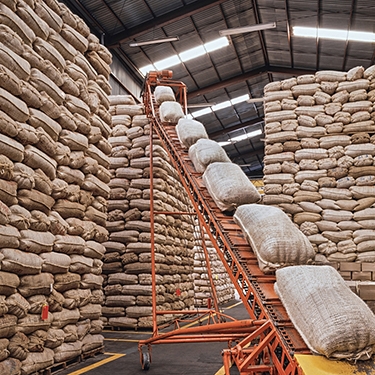
On behalf of a Canadian oilseed processer WPI's team provided market analysis, econometric modeling and financial due diligence in support of a $24 million-dollar investment in a Ukrainian crush plant. Consistent with WPI's findings, local production to supply the plant and the facility's output have expanded exponentially since the investment. WPI has conducted parallel work on behalf of U.S., South American and European clients, both private and public, in the agri-food space.