
E15 and SREs Yesterday the EPA submitted its proposal for year-round E15 use to the Office of Management and Budget (OMB) for sign-off. As noted here on Friday, a quick timeline for approval could be 75 days, which is slightly less than the number of days before the 1 June start of the summer driving season. Thus, the countdown is underway, and the rule will be out as early as next week. As also reported then, the petroleum industry is likely to challenge the EPA waiver in court, but legislation has been introduced in the Senate that would address the justification for that move (click here). Meanwhile, the EPA has updated information on the petitions received for small refinery exemptions (SREs) for compliance year 2018, which rais...


 ZanzibarMnemba Marine Parksouthern cassowary Mnemba Marine Park is located 10 kilometres (6 mi) from Stone Town and forms part of the northeastern Unguja Island. A marine reserve and atoll, its shallow stretch of coral reef is in the shape of an oval. It is located between Matemwe and Nungwi, w...


 content here...

 The magpie goose (Anseranas semipalmata) is the sole living representative species of the family Anseranatidae. This waterbird is found in northern Australia and southern New Guinea.[2] The species is not truly migratory but it sometimes travels large distances to find food and water, especiall...
 A pika (/ˈpaɪkə, ˈpiːkə/ PY-kə, PEE-kə[3][4]) is a small, mountain-dwelling mammal native to Asia and North America. With short limbs, a very round body, an even coat of fur, and no external tail, they resemble their close relative the rabbit, but with short, rounded ears.[5] The large-eared pi...

From WPI Consulting
Infrastructure investment due diligence
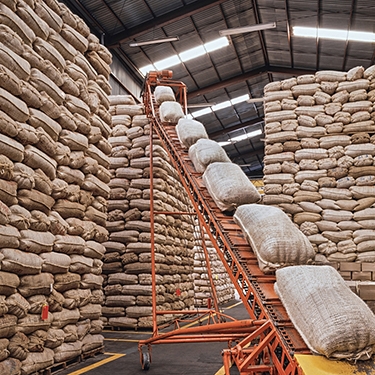
On behalf of a Canadian oilseed processer WPI's team provided market analysis, econometric modeling and financial due diligence in support of a $24 million-dollar investment in a Ukrainian crush plant. Consistent with WPI's findings, local production to supply the plant and the facility's output have expanded exponentially since the investment. WPI has conducted parallel work on behalf of U.S., South American and European clients, both private and public, in the agri-food space.