

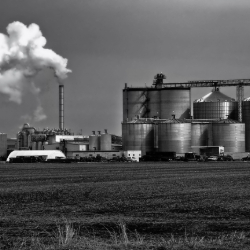
Previous administrations—including that of President Donald Trump—have promoted domestic consumption of corn and soybeans through expanded biofuel mandates and subsidies. The original framework for this policy was the Energy Independence and Security Act of 2007, which required the production of 15 billion gallons of corn ethanol by 2022. That target has been achieved and surpassed: U.S. ethanol production reached approximately 16.9 billion gallons in 2025, accounting for roughly 10–11 percent of total gasoline consumption. Most gasoline (roughly 90–95 percent) in the United States is currently sold as a 10 percent ethanol blend (E10), which has historically functioned as a practical “blend wall” under pr...


 ZanzibarMnemba Marine Park Mnemba Marine Park is located 10 kilometres (6 mi) from Stone Town and forms part of the northeastern Unguja Island. A marine reserve and atoll, its shallow stretch of coral reef is in the shape of an oval. It is located between Matemwe and Nungwi, which is an importa...


 content here...

 The magpie goose (Anseranas semipalmata) is the sole living representative species of the family Anseranatidae. This waterbird is found in northern Australia and southern New Guinea.[2] The species is not truly migratory but it sometimes travels large distances to find food and water, especiall...
 A pika (/ˈpaɪkə, ˈpiːkə/ PY-kə, PEE-kə[3][4]) is a small, mountain-dwelling mammal native to Asia and North America. With short limbs, a very round body, an even coat of fur, and no external tail, they resemble their close relative the rabbit, but with short, rounded ears.[5] The large-eared pi...

From WPI Consulting
Accountability and a comprehensive approach to export programming

WPI’s team helped construct a strategic approach to develop, implement, and track promotional activities in 8 key regions across the globe for an agricultural export association. With continued progress measurement and strategic advisory services from WPI, the association has seen its ROI from investments in promotional programming increase by 44 percent over the past 5 years. Not only does this type of holistic approach to organizational strategy provide measurable results to track and analyze, it fosters top-down and bottom-up organizational accountability.