
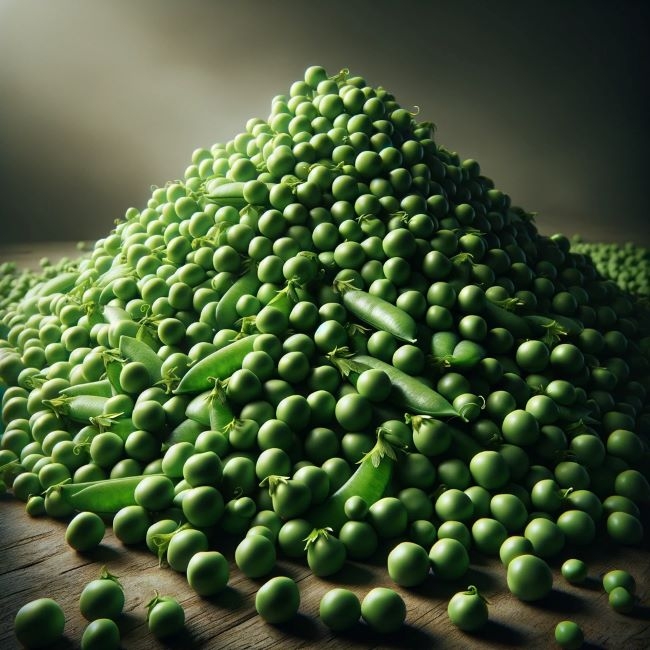
Plants such as beans, lentils and chickpeas are the nutritional rage. They are plant derived foods with higher protein content and thus their production and consumption should be on the rise. But alas, the USDA data is not comporting with that nutritional advice. Over the past four years, the U.S. area planted to dried peas, beans, lentils and chickpeas has gone down, along with production. Imports and exports of these commodities have risen, but the strong dollar distorts the situation. On a quantity basis, imports are up 5.1 percent and exports are down by 5.3 percent, but exports are still three times the volume as imports. Either way, the per capita availability of these supposedly preferred foods has gone down. ...



 A microlith is a small stone tool usually made of flint or chert and typically several centimeters in length and half a centimetre wide. They were made by humans from at least the Upper Paleolithic, across Africa, Europe, Asia and Australia. The microliths were used in spear points and arrowhea...


 Lobelia (/loʊˈbiːliə, lə-/[4][5][6]) is a genus of flowering plants in the family Campanulaceae comprising 415 species,[7] with a subcosmopolitan distribution primarily in tropical to warm temperate regions of the world, a few species extending into cooler temperate regions.[8] They are known g...
 The Alaska marmot (Marmota broweri), also known as the Brooks Range marmot[3] or the Brower's marmot,[4] is a species of rodent in the family Sciuridae. Once considered to be the same species as the hoary marmot, it is now known to be unique. Alaska marmots are found in the scree slopes of the...

From WPI Consulting
Like all marmots
An adult Vancouver Island marmot typically measures 65 to 70 centimetres (26 to 28 in) from the tip of its nose to the tip of its tail.