
USDA is leading a trade mission to India, noting that it is 1.4 billion people or 18 percent of the global population but accounts for less than one percent of U.S. agricultural exports. Average tariff rates tend to be higher in developing countries and lower in developed countries. But India’s average tariff is among the highest of its peer countries, and 5.5 times that of the U.S. or EU. More problematic is its high bound rates and tendency to frequently change the applied rate as a market management tool. India also has the highest number of nontariff trade barriers of the countries featured below. Trade is very important to Canada and Australia, highly developed economies but with relatively smaller populations. The trade p...



 A federal appeals court paused a USITC ruling against President Trump’s use of Section 122 to impose 10-percent global tariffs. A bipartisan group of 80 House members asked USTR to investigate specialty crop imports from Mexico for unfair trade practices. India notified the WT...

 The Trump Administration is planning a suspension of tariff rate quotas (TRQs) on beef from all exporters for 200 days as a means to address high beef prices in the U.S. U.S. cattle and beef prices have increased based on exceptionally strong consumer demand, the smallest U.S. cattle herd in 75...

From WPI Consulting
Infrastructure investment due diligence
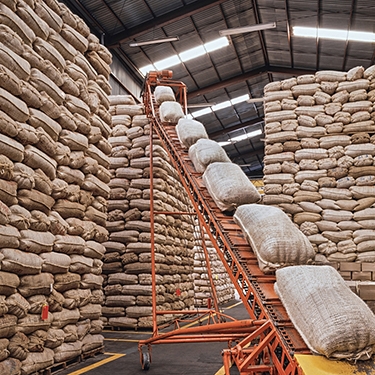
On behalf of a Canadian oilseed processer WPI's team provided market analysis, econometric modeling and financial due diligence in support of a $24 million-dollar investment in a Ukrainian crush plant. Consistent with WPI's findings, local production to supply the plant and the facility's output have expanded exponentially since the investment. WPI has conducted parallel work on behalf of U.S., South American and European clients, both private and public, in the agri-food space.