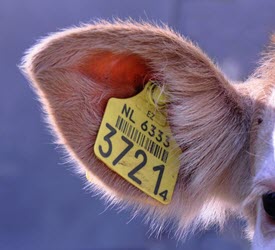
As summer demand for beef is upon us, fed cattle hit $233 per cwt yesterday, having moved above $200 per cwt in April on tight supplies. The cattle herd as of 1 January was the smallest in more than 50 years, imports of feeder cattle from Mexico have been suspended due to the New World Screwworm (NWS), and beef demand remains stubbornly high.
U.S. Secretary of Agriculture Brooke Rollins yesterday announced a new protocol for risk-based port re-openings for cattle from Mexico beginning as early 7 July 2025. The USDA, along with APHIS and their counterparts in Mexico, from the National Department of Health, Food Safety and Food Quality (SENASICA), have increased NWS surveillance, detection, and eradication efforts. This will begi...



 The magpie goose (Anseranas semipalmata) is the sole living representative species of the family Anseranatidae. This waterbird is found in northern Australia and southern New Guinea.[2] The species is not truly migratory but it sometimes travels large distances to find food and water, especiall...
 The common ostrich (Struthio camelus), or simply ostrich, is a species of flightless bird native to certain areas of Africa (and historically, Arabia) and is the largest living species of bird. The common ostrich is one of two extant species of ostriches, the only living members of the genus St...
 A pika (/ˈpaɪkə, ˈpiːkə/ PY-kə, PEE-kə[3][4]) is a small, mountain-dwelling mammal native to Asia and North America. With short limbs, a very round body, an even coat of fur, and no external tail, they resemble their close relative the rabbit, but with short, rounded ears.[5] The large-eared pi...

 Lobelia (/loʊˈbiːliə, lə-/[4][5][6]) is a genus of flowering plants in the family Campanulaceae comprising 415 species,[7] with a subcosmopolitan distribution primarily in tropical to warm temperate regions of the world, a few species extending into cooler temperate regions.[8] They are known g...