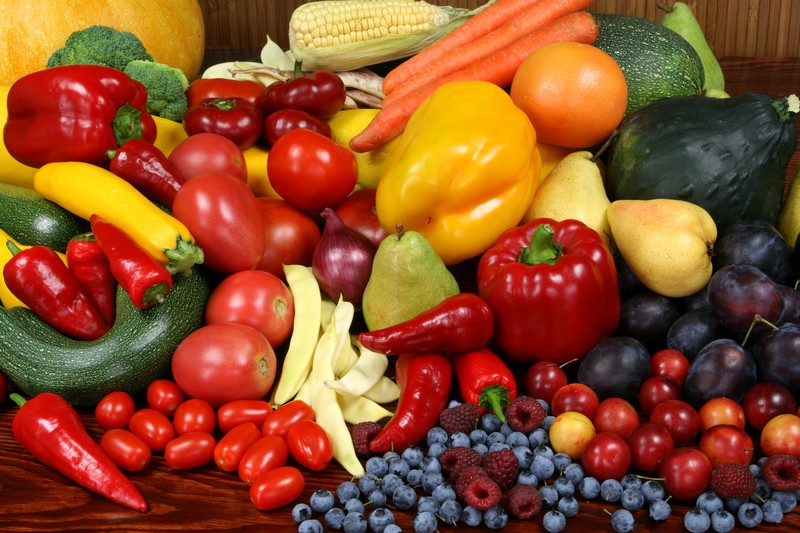
According to the U.S. Centers for Disease Control, only one in 10 American adults meets the dietary guidelines for fruit and vegetable consumption. Meanwhile, U.S. production of these crops is flat to declining. The gap between supply and consumption is being filled by imports (see graph below).
According to the FAO, the U.S. has 50 percent more arable land than the EU and yet Europe produces 140 percent more fruit and 97 percent more vegetables (see graph below). Europe’s population is 58 percent larger so that does not account for the full difference.
The EU offers support to 72 different specialty crops, including supply management, promotion, harvest insurance, etc. The U.S. provides support to 21 different specialty c...



 content here...

 A pika (/ˈpaɪkə, ˈpiːkə/ PY-kə, PEE-kə[3][4]) is a small, mountain-dwelling mammal native to Asia and North America. With short limbs, a very round body, an even coat of fur, and no external tail, they resemble their close relative the rabbit, but with short, rounded ears.[5] The large-eared pi...
 Gloriosa is a genus of 12 species in the plant family Colchicaceae, and includes the formerly recognised genus Littonia. They are native in tropical and southern Africa to Asia, and naturalised in Australia and the Pacific as well as being widely cultivated.[3] The most common English names are...
 Lobelia (/loʊˈbiːliə, lə-/[4][5][6]) is a genus of flowering plants in the family Campanulaceae comprising 415 species,[7] with a subcosmopolitan distribution primarily in tropical to warm temperate regions of the world, a few species extending into cooler temperate regions.[8] They are known g...