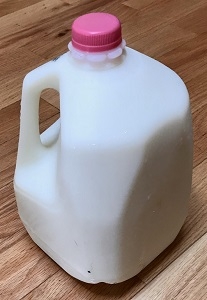
GE Labeling Starting in 2022, the U.S. will have mandatory labeling of foods with detectable amounts of genetically modified content. WPI emphasizes what USDA itself said about the mandate when issuing the proposal back in 2018: "The proposed NBFDS [National Bioengineered Food Disclosure Act] is not expected to have any benefits to human health or the environment. Any benefits to consumers from the provision of reliable information about BE [bioengineered] food products are difficult to measure." Skewed Meat View The Biden Administration’s attack on U.S. meat packers as monopolists is largely the result of listening to a small group of activists rather than an objective economic analysis. The New York Times is usually a reli...



 A pika (/ˈpaɪkə, ˈpiːkə/ PY-kə, PEE-kə[3][4]) is a small, mountain-dwelling mammal native to Asia and North America. With short limbs, a very round body, an even coat of fur, and no external tail, they resemble their close relative the rabbit, but with short, rounded ears.[5] The large-eared pi...


 Lobelia (/loʊˈbiːliə, lə-/[4][5][6]) is a genus of flowering plants in the family Campanulaceae comprising 415 species,[7] with a subcosmopolitan distribution primarily in tropical to warm temperate regions of the world, a few species extending into cooler temperate regions.[8] They are known g...

 Text. More random text. Lots and lots of text. Just to fill out the article. Lore ipsum or whatever the hell it is. Lore ipsum or whatever the hell it is. Lore ipsum or whatever the hell it is. Lore ipsum or whatever the hell it is. Lore ipsum or whatever the hell it is. Lore ipsum or whatever...

From WPI Consulting
Infrastructure investment due diligence
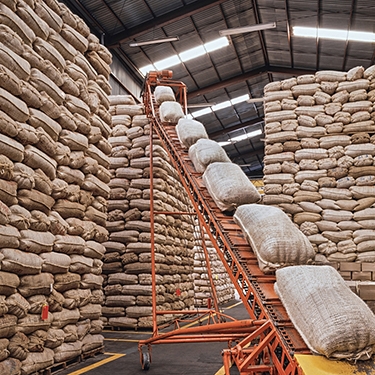
On behalf of a Canadian oilseed processer WPI's team provided market analysis, econometric modeling and financial due diligence in support of a $24 million-dollar investment in a Ukrainian crush plant. Consistent with WPI's findings, local production to supply the plant and the facility's output have expanded exponentially since the investment. WPI has conducted parallel work on behalf of U.S., South American and European clients, both private and public, in the agri-food space.