Geopolitics and Trade Post WWII trade policy by Washington was largely driven by Cold War tactics. Offer countries easier access to the big American consumer market in exchange for supporting the West against the Soviet Union. There was a brief 20-year period after the fall of the USSR in which geopolitics and economics became less entangled but Russia’s invasion of Ukraine and China’s hysteric reaction to a U.S. Congresswoman going to Taiwan has changed the calculus. Now the Biden White House has put possible tariff cuts on Chinese goods on hold, and it has imposed ample sanctions on Russia. Labor’s Distortions USTR Katherine Tai made clear in her presentation this week to the United Steelworkers’ union that orga...



 A pika (/ˈpaɪkə, ˈpiːkə/ PY-kə, PEE-kə[3][4]) is a small, mountain-dwelling mammal native to Asia and North America. With short limbs, a very round body, an even coat of fur, and no external tail, they resemble their close relative the rabbit, but with short, rounded ears.[5] The large-eared pi...


 Lobelia (/loʊˈbiːliə, lə-/[4][5][6]) is a genus of flowering plants in the family Campanulaceae comprising 415 species,[7] with a subcosmopolitan distribution primarily in tropical to warm temperate regions of the world, a few species extending into cooler temperate regions.[8] They are known g...

 Text. More random text. Lots and lots of text. Just to fill out the article. Lore ipsum or whatever the hell it is. Lore ipsum or whatever the hell it is. Lore ipsum or whatever the hell it is. Lore ipsum or whatever the hell it is. Lore ipsum or whatever the hell it is. Lore ipsum or whatever...

From WPI Consulting
Forecasting developments in production agriculture
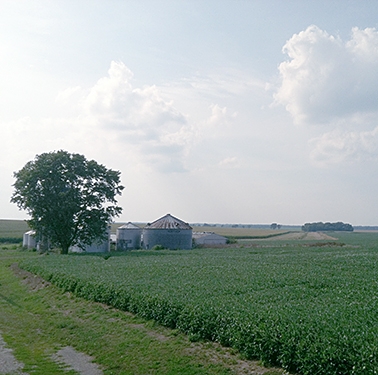
On behalf of a private U.S. agricultural technology provider, WPI’s team generated an econometric model to forecast the movement of concentrated corn production north and west from the traditional U.S. Corn Belt. WPI’s model has subsequently provided quantitative support to a multi-million-dollar investment into short-season corn variety development. WPI’s methodology included a series of interviews with regional grain elevators and seed consultants. Emphasizing outreach and communication with stakeholders who possess intimate sectoral knowledge – on-the-ground insights – is a regular component of WPI’s methodologies, made possible by WPI’s ever-growing network of industry contacts.