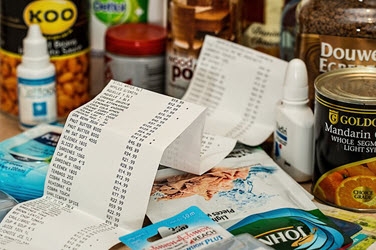
The consumer is often said to be the backbone of the U.S. economy, and that looks to be a positive factor for the food and agricultural sectors. The U.S. Census Bureau recently released its monthly advanced estimates of retail and food service sales, which are broadly encouraging from a macroeconomic perspective. The data show broad-based sales increases, largely driven by robust consumer spending. Consumer spending, of course, is nearly always good for the economy, provided it isn’t financed with unreasonable debt/income ratios. The Census Bureau’s latest data shows widespread sales increases across most industry sectors. Total retail sales in August were up from the prior month and also from the same month in 2018, afte...



 A pika (/ˈpaɪkə, ˈpiːkə/ PY-kə, PEE-kə[3][4]) is a small, mountain-dwelling mammal native to Asia and North America. With short limbs, a very round body, an even coat of fur, and no external tail, they resemble their close relative the rabbit, but with short, rounded ears.[5] The large-eared pi...


 Lobelia (/loʊˈbiːliə, lə-/[4][5][6]) is a genus of flowering plants in the family Campanulaceae comprising 415 species,[7] with a subcosmopolitan distribution primarily in tropical to warm temperate regions of the world, a few species extending into cooler temperate regions.[8] They are known g...

 Text. More random text. Lots and lots of text. Just to fill out the article. Lore ipsum or whatever the hell it is. Lore ipsum or whatever the hell it is. Lore ipsum or whatever the hell it is. Lore ipsum or whatever the hell it is. Lore ipsum or whatever the hell it is. Lore ipsum or whatever...

From WPI Consulting
Infrastructure investment due diligence
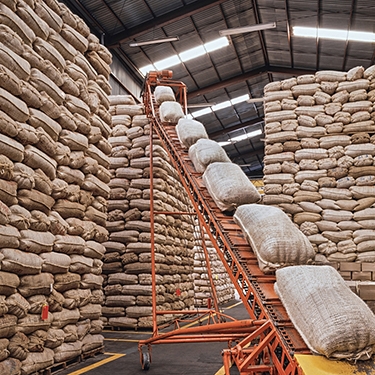
On behalf of a Canadian oilseed processer WPI's team provided market analysis, econometric modeling and financial due diligence in support of a $24 million-dollar investment in a Ukrainian crush plant. Consistent with WPI's findings, local production to supply the plant and the facility's output have expanded exponentially since the investment. WPI has conducted parallel work on behalf of U.S., South American and European clients, both private and public, in the agri-food space.