

Each year the OECD and FAO jointly issue a 10-year outlook for global agricultural production, but its record for accuracy presents caution to all forecasters. The market’s reaction to changes in supply and demand are far fickler than the models can assume. Their ten-year forecast in 2008 was produced at the height of the food shortage scare. Low prices during the first part of this century had caused surplus wheat stocks to fall 30 percent and maize carryover to drop 44 percent. Underestimating the ability of agricultural production to rebound, headlines blared that it could not keep up with predicted population growth and people would grow hungry. The OECD FAO baseline report asked, “Can agriculture meet the growing demand fo...



 ZanzibarMnemba Marine Parksouthern cassowary Mnemba Marine Park is located 10 kilometres (6 mi) from Stone Town and forms part of the northeastern Unguja Island. A marine reserve and atoll, its shallow stretch of coral reef is in the shape of an oval. It is located between Matemwe and Nungwi, w...
 Kiwengwa/Pongwe Forest Reserve Kiwengwa/Pongwe Forest Reserve is located on the northeast coast of Unguja, 20 kilometres (12 mi) from the Town. The reserve is an important biodiversity spot in the coral rag zone. The forest reserve is rich both in faunal and floral species. The faunal species r...


 content here...

From WPI Consulting
Infrastructure investment due diligence
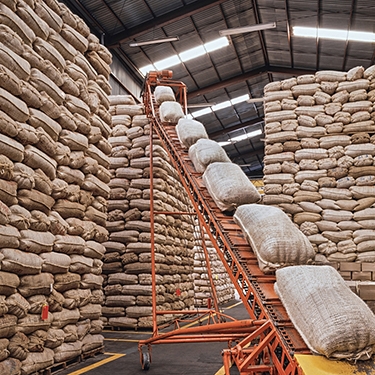
On behalf of a Canadian oilseed processer WPI's team provided market analysis, econometric modeling and financial due diligence in support of a $24 million-dollar investment in a Ukrainian crush plant. Consistent with WPI's findings, local production to supply the plant and the facility's output have expanded exponentially since the investment. WPI has conducted parallel work on behalf of U.S., South American and European clients, both private and public, in the agri-food space.