
Matthew Klein (Barrons) and Michael Pettis (Peking University) have authored the book, Trade Wars are Class Wars. In it, they argue that countries like Germany, Ireland, and Switzerland run trade surpluses because their domestic policies leave consumers with less disposable income, forcing their manufacturers to seek consumers elsewhere. With Germany specifically they contend that through tax increases on workers, spending cuts on public investment, and social welfare programs, consumers get squeezed and import demand gets suppressed. Looking at the Gini index for income distribution in countries and their trade surplus/deficit, this assertion does not hold up. The U.S. has the largest trade deficit but ranks worse for income distribution...



 A pika (/ˈpaɪkə, ˈpiːkə/ PY-kə, PEE-kə[3][4]) is a small, mountain-dwelling mammal native to Asia and North America. With short limbs, a very round body, an even coat of fur, and no external tail, they resemble their close relative the rabbit, but with short, rounded ears.[5] The large-eared pi...


 Lobelia (/loʊˈbiːliə, lə-/[4][5][6]) is a genus of flowering plants in the family Campanulaceae comprising 415 species,[7] with a subcosmopolitan distribution primarily in tropical to warm temperate regions of the world, a few species extending into cooler temperate regions.[8] They are known g...

 Text. More random text. Lots and lots of text. Just to fill out the article. Lore ipsum or whatever the hell it is. Lore ipsum or whatever the hell it is. Lore ipsum or whatever the hell it is. Lore ipsum or whatever the hell it is. Lore ipsum or whatever the hell it is. Lore ipsum or whatever...

From WPI Consulting
Infrastructure investment due diligence
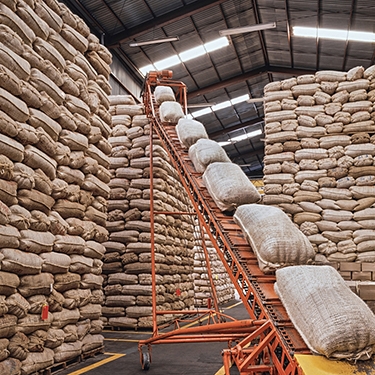
On behalf of a Canadian oilseed processer WPI's team provided market analysis, econometric modeling and financial due diligence in support of a $24 million-dollar investment in a Ukrainian crush plant. Consistent with WPI's findings, local production to supply the plant and the facility's output have expanded exponentially since the investment. WPI has conducted parallel work on behalf of U.S., South American and European clients, both private and public, in the agri-food space.