


Oil Meal Exports Continue Upward Trend India’s oil meal exports totaled 1.403 MMT for the first six months of FY 2018/19 (April-March), up 0.119 MMT or 9 percent from 1.284 MMT a year ago. Rapeseed meal exports had the biggest gain at 0.601 MMT versus 0.3 MMT during April-September 2017. In contrast, soymeal exports were down at 0.392 MMT against 0.489 MMT during the same period a year ago. September 2018 was a slow month overall with only 81,511 MT of oil meals exported, down about 73 percent from 0.298 MMT in the same month of 2017, and soymeal accounted for 20,987 MT of those shipments against 102,212 MT a year ago. Oil meal exports to Southeast Asia (SEA) and Europe were up during April-September. For comparison with the same pe...



 A microlith is a small stone tool usually made of flint or chert and typically several centimeters in length and half a centimetre wide. They were made by humans from at least the Upper Paleolithic, across Africa, Europe, Asia and Australia. The microliths were used in spear points and arrowhea...
 Kiwengwa/Pongwe Forest Reserve Kiwengwa/Pongwe Forest Reserve is located on the northeast coast of Unguja, 20 kilometres (12 mi) from the Town. The reserve is an important biodiversity spot in the coral rag zone. The forest reserve is rich both in faunal and floral species. The faunal species r...


 content here...
 Fabiana is a genus of flowering plants in the nightshade family, native to dry slopes in western South America.[1] They are evergreen shrubs or subshrubs,[1] with needle-like leaves and profuse tiny tubular flowers in summer. The common name is false heath because the leaves superficially resem...

From WPI Consulting
Forecasting developments in production agriculture
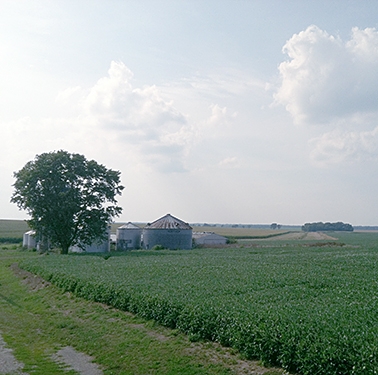
On behalf of a private U.S. agricultural technology provider, WPI’s team generated an econometric model to forecast the movement of concentrated corn production north and west from the traditional U.S. Corn Belt. WPI’s model has subsequently provided quantitative support to a multi-million-dollar investment into short-season corn variety development. WPI’s methodology included a series of interviews with regional grain elevators and seed consultants. Emphasizing outreach and communication with stakeholders who possess intimate sectoral knowledge – on-the-ground insights – is a regular component of WPI’s methodologies, made possible by WPI’s ever-growing network of industry contacts.