


Indian Market Should Open to U.S. Imports The U.S. Commerce Dept. and U.S. Trade Representative first raised market access issues with India at the 26 October 2017 Trade Policy Forum (TPF) held in Washington, DC, and pressure has continued to build on the nation to open its doors to U.S. products. A 42-member team, consisting of U.S. companies and various government as well as non-government agencies, is in India to discuss trade with its counterparts and how to enhance it. There is also an effort to work with those like-minded to find ways to increase the ease of doing business. India has actually moved up 30 paces in that category, according to World Bank rankings. However, a more open approach may exist in some sectors, but that definit...



 A microlith is a small stone tool usually made of flint or chert and typically several centimeters in length and half a centimetre wide. They were made by humans from at least the Upper Paleolithic, across Africa, Europe, Asia and Australia. The microliths were used in spear points and arrowhea...
 Fabiana is a genus of flowering plants in the nightshade family, native to dry slopes in western South America.[1] They are evergreen shrubs or subshrubs,[1] with needle-like leaves and profuse tiny tubular flowers in summer. The common name is false heath because the leaves superficially resem...

 The magpie goose (Anseranas semipalmata) is the sole living representative species of the family Anseranatidae. This waterbird is found in northern Australia and southern New Guinea.[2] The species is not truly migratory but it sometimes travels large distances to find food and water, especiall...
 The common ostrich (Struthio camelus), or simply ostrich, is a species of flightless bird native to certain areas of Africa (and historically, Arabia) and is the largest living species of bird. The common ostrich is one of two extant species of ostriches, the only living members of the genus St...

From WPI Consulting
Infrastructure investment due diligence
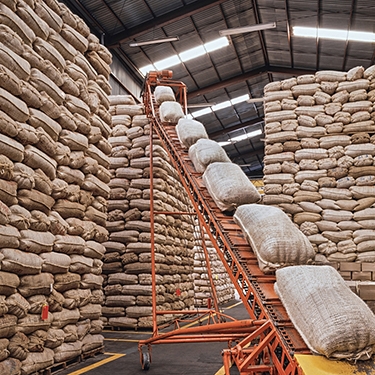
On behalf of a Canadian oilseed processer WPI's team provided market analysis, econometric modeling and financial due diligence in support of a $24 million-dollar investment in a Ukrainian crush plant. Consistent with WPI's findings, local production to supply the plant and the facility's output have expanded exponentially since the investment. WPI has conducted parallel work on behalf of U.S., South American and European clients, both private and public, in the agri-food space.