
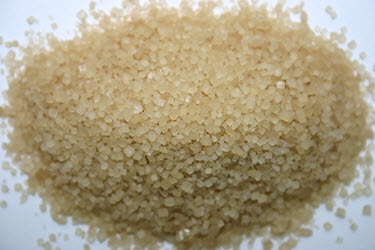
The repeated threat of sanctions by the EU and U.S. were not enough to prevent Vladimir Putin from moving on Ukraine, and they likely will not be enough to affect Daniel Ortega in Nicaragua. He has been the president of the country for most of the past 15 years and the U.S. argues it is because he has repressed his political rivals. Washington is threatening to either remove Nicaragua’s access to the U.S. sugar import quota or kick the country out of CAFTA. Of those two choices, CAFTA bears more weight. Nicaragua already has a relatively small share of the U.S. sugar import quota. It represents just 2.9 percent of Nicaraguan agricultural exports to the U.S. By contrast, ending the broader CAFTA trade agreement benefits received by Ni...



 A microlith is a small stone tool usually made of flint or chert and typically several centimeters in length and half a centimetre wide. They were made by humans from at least the Upper Paleolithic, across Africa, Europe, Asia and Australia. The microliths were used in spear points and arrowhea...

 The Alaska marmot (Marmota broweri), also known as the Brooks Range marmot[3] or the Brower's marmot,[4] is a species of rodent in the family Sciuridae. Once considered to be the same species as the hoary marmot, it is now known to be unique. Alaska marmots are found in the scree slopes of the...


From WPI Consulting
Infrastructure investment due diligence
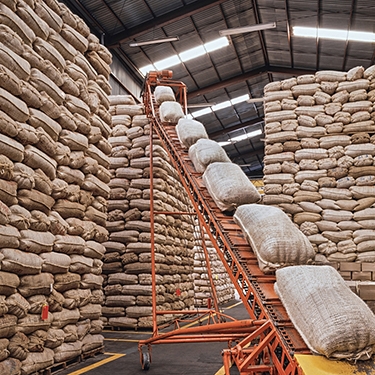
On behalf of a Canadian oilseed processer WPI's team provided market analysis, econometric modeling and financial due diligence in support of a $24 million-dollar investment in a Ukrainian crush plant. Consistent with WPI's findings, local production to supply the plant and the facility's output have expanded exponentially since the investment. WPI has conducted parallel work on behalf of U.S., South American and European clients, both private and public, in the agri-food space.