
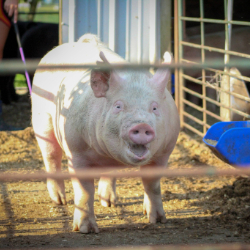
An amendment to the U.S. House farm bill, aiming to remove the Save Our Bacon Act language in Section 12006 that would have stripped language to prohibit California’s Proposition 12, Massachusetts’ Question 3, and up to 500 state agricultural laws across the country, was blocked by the U.S. House Rules Committee from proceeding to the House floor Tuesday. The amendment was proposed by Representatives Anna Paulia Luna (R-Florida), Andrew Garbarino (R-New York), Brian Fitzpatrick (R-Pennsylvania), and Jim Costa (D-California) and would, prospectively, prohibit state and local governments from regulating the production of livestock in other states. The farm bill is experiencing a tumultuous path to the House floor. In order to have...



 An Ankylosaurus lumbers along the shore of what’s now eastern Montana. Walking low to the ground, the dino uses its flat, leaf-shaped teeth to tear at ferns lining the water. Suddenly, a shadow looms over the herbivore—a Tyrannosaurus rex is hungry. But Ankylosaurus won’t be a...

 The magpie goose (Anseranas semipalmata) is the sole living representative species of the family Anseranatidae. This waterbird is found in northern Australia and southern New Guinea.[2] The species is not truly migratory but it sometimes travels large distances to find food and water, especiall...
 The common ostrich (Struthio camelus), or simply ostrich, is a species of flightless bird native to certain areas of Africa (and historically, Arabia) and is the largest living species of bird. The common ostrich is one of two extant species of ostriches, the only living members of the genus St...

From WPI Consulting
Infrastructure investment due diligence
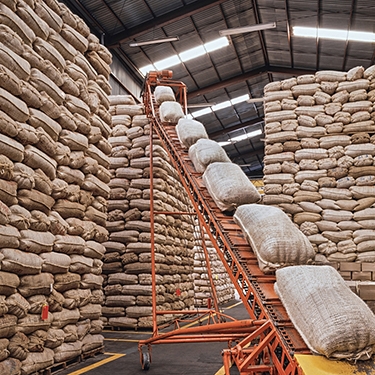
On behalf of a Canadian oilseed processer WPI's team provided market analysis, econometric modeling and financial due diligence in support of a $24 million-dollar investment in a Ukrainian crush plant. Consistent with WPI's findings, local production to supply the plant and the facility's output have expanded exponentially since the investment. WPI has conducted parallel work on behalf of U.S., South American and European clients, both private and public, in the agri-food space.