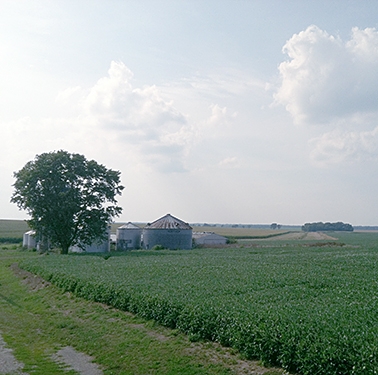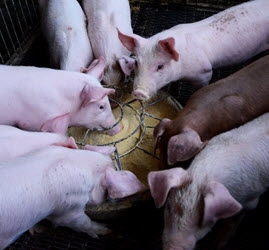
Two key trends bely what’s in store for meat and livestock in late 2021 and early 2022: the prices of feeder pigs and feeder cattle. As we wrote last week, demand for protein remains strong. Moreover, supplies of livestock are tightening, especially downstream to feeders. First, hogs – the relatively more straight-forward situation of the two. There has been a lot of packing capacity added in the past several years, and the herd is contracting. The last quarterly Hogs and Pigs report (WPI’s 24 June coverage here) showed the first drop in the June inventory since 2014.
Since the end of June, packers have bid less aggressively for hogs and the national negotiated price has cooled, but feeder pig prices have remained well...



 The magpie goose (Anseranas semipalmata) is the sole living representative species of the family Anseranatidae. This waterbird is found in northern Australia and southern New Guinea.[2] The species is not truly migratory but it sometimes travels large distances to find food and water, especiall...
 The common ostrich (Struthio camelus), or simply ostrich, is a species of flightless bird native to certain areas of Africa (and historically, Arabia) and is the largest living species of bird. The common ostrich is one of two extant species of ostriches, the only living members of the genus St...
 A pika (/ˈpaɪkə, ˈpiːkə/ PY-kə, PEE-kə[3][4]) is a small, mountain-dwelling mammal native to Asia and North America. With short limbs, a very round body, an even coat of fur, and no external tail, they resemble their close relative the rabbit, but with short, rounded ears.[5] The large-eared pi...

 Lobelia (/loʊˈbiːliə, lə-/[4][5][6]) is a genus of flowering plants in the family Campanulaceae comprising 415 species,[7] with a subcosmopolitan distribution primarily in tropical to warm temperate regions of the world, a few species extending into cooler temperate regions.[8] They are known g...