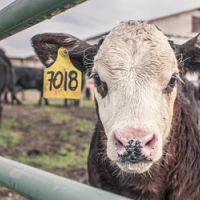
The U.S. beef cow herd stabilized somewhat in 2024. The average culling rate was 10.5 percent, but with a beef cow herd of 28 million, the cull rate would have to be around 9 percent – or less – and heifer retention must increase in order to enter into an expansion phase. Holding back heifer retention is the current record price level for feeder cattle; producers are more than willing to take advantage of those record prices than to invest in future expansion. For many operations, current production risks outweigh potential future returns. April prices for medium to large-frame feeder cattle between 600 and 650 pounds are $290/cwt.
Steer prices are projected to reach $205.51/cwt for the year, up 10 percent, while fe...



 The magpie goose (Anseranas semipalmata) is the sole living representative species of the family Anseranatidae. This waterbird is found in northern Australia and southern New Guinea.[2] The species is not truly migratory but it sometimes travels large distances to find food and water, especiall...
 The common ostrich (Struthio camelus), or simply ostrich, is a species of flightless bird native to certain areas of Africa (and historically, Arabia) and is the largest living species of bird. The common ostrich is one of two extant species of ostriches, the only living members of the genus St...
 A pika (/ˈpaɪkə, ˈpiːkə/ PY-kə, PEE-kə[3][4]) is a small, mountain-dwelling mammal native to Asia and North America. With short limbs, a very round body, an even coat of fur, and no external tail, they resemble their close relative the rabbit, but with short, rounded ears.[5] The large-eared pi...

 Lobelia (/loʊˈbiːliə, lə-/[4][5][6]) is a genus of flowering plants in the family Campanulaceae comprising 415 species,[7] with a subcosmopolitan distribution primarily in tropical to warm temperate regions of the world, a few species extending into cooler temperate regions.[8] They are known g...