



Funds were net sellers in a day that bears regained the fundamental advantage. With China having claimed yesterday to officially suspend its purchases of U.S. agricultural goods, demand destruction now reigns supreme in the market’s mind. If China truly avoids U.S. ag commodities, the odds are poor that all other countries importing U.S. products can make up for the trade war damage. Consequently, with China sidelined until trade talks restart, the only probable market shock that could spark a rally would be weather-related supply losses. Presently, NOAA’s long-lead forecast suggests the major U.S. crop-growing regions will have normal temperatures and average or above-average precipitation possibly into October. There is some...


 Kiwengwa/Pongwe Forest Reserve Kiwengwa/Pongwe Forest Reserve is located on the northeast coast of Unguja, 20 kilometres (12 mi) from the Town. The reserve is an important biodiversity spot in the coral rag zone. The forest reserve is rich both in faunal and floral species. The faunal species r...


 content here...
 Fabiana is a genus of flowering plants in the nightshade family, native to dry slopes in western South America.[1] They are evergreen shrubs or subshrubs,[1] with needle-like leaves and profuse tiny tubular flowers in summer. The common name is false heath because the leaves superficially resem...

From WPI Consulting
Infrastructure investment due diligence
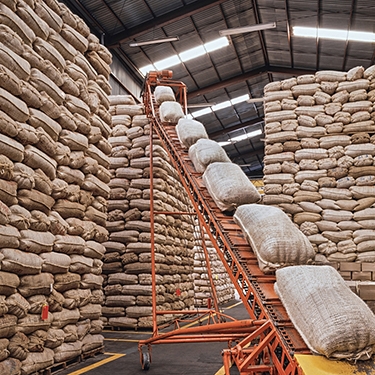
On behalf of a Canadian oilseed processer WPI's team provided market analysis, econometric modeling and financial due diligence in support of a $24 million-dollar investment in a Ukrainian crush plant. Consistent with WPI's findings, local production to supply the plant and the facility's output have expanded exponentially since the investment. WPI has conducted parallel work on behalf of U.S., South American and European clients, both private and public, in the agri-food space.