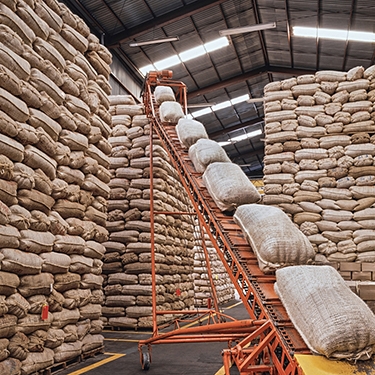
It might be called pre-positioning ahead of tomorrow’s USDA May WASDE report, but it looked like more of the same. Corn and wheat took their dings, but soybeans and meal were immune. The trend is down, and this week of trading has reinforced that dynamic. But it isn’t an exuberant abandonment since volume was generally lower except for the soy complex.
There remains a bad combination of large supplies coming out of Brazil, and potentially large new supply in the U.S., all confronting a less certain demand structure. The biggest market, China, is not only avoiding sourcing from the U.S. but domestically it is disparaging American agriculture to its consumers. The USDA Export Sales report covering last week was a m...


 Kiwengwa/Pongwe Forest Reserve Kiwengwa/Pongwe Forest Reserve is located on the northeast coast of Unguja, 20 kilometres (12 mi) from the Town. The reserve is an important biodiversity spot in the coral rag zone. The forest reserve is rich both in faunal and floral species. The faunal species r...
 Fabiana is a genus of flowering plants in the nightshade family, native to dry slopes in western South America.[1] They are evergreen shrubs or subshrubs,[1] with needle-like leaves and profuse tiny tubular flowers in summer. The common name is false heath because the leaves superficially resem...
 An Ankylosaurus lumbers along the shore of what’s now eastern Montana. Walking low to the ground, the dino uses its flat, leaf-shaped teeth to tear at ferns lining the water. Suddenly, a shadow looms over the herbivore—a Tyrannosaurus rex is hungry. But Ankylosaurus won’t be a...