



Bullish sentiments have been driving the CBOT higher since last week’s U.S.-China trade talks, but bears finally made an appearance on Tuesday. The CBOT saw the entire soy complex pullback as China has not confirmed anything about what the Trump administration claims was agreed to in South Korea last week. Moreover, China booked Brazilian soybeans after the South Korea meeting because that was the cheaper origin and whatever volume agreements were made were apparently not enough to force paying up for U.S. beans. The soybean weakness spilled over into corn, which saw issues of its own as private yield predictions are coming in above recent rumors. The cattle markets joined in the selloff too with conflicting statements on the outlook...


 Kiwengwa/Pongwe Forest Reserve Kiwengwa/Pongwe Forest Reserve is located on the northeast coast of Unguja, 20 kilometres (12 mi) from the Town. The reserve is an important biodiversity spot in the coral rag zone. The forest reserve is rich both in faunal and floral species. The faunal species r...
 Fabiana is a genus of flowering plants in the nightshade family, native to dry slopes in western South America.[1] They are evergreen shrubs or subshrubs,[1] with needle-like leaves and profuse tiny tubular flowers in summer. The common name is false heath because the leaves superficially resem...
 An Ankylosaurus lumbers along the shore of what’s now eastern Montana. Walking low to the ground, the dino uses its flat, leaf-shaped teeth to tear at ferns lining the water. Suddenly, a shadow looms over the herbivore—a Tyrannosaurus rex is hungry. But Ankylosaurus won’t be a...

From WPI Consulting
Infrastructure investment due diligence
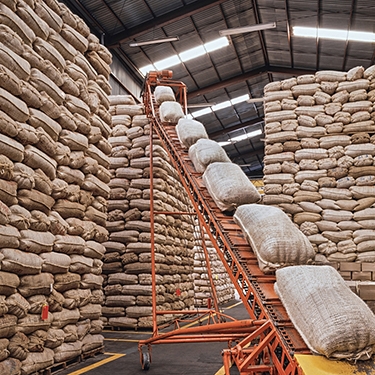
On behalf of a Canadian oilseed processer WPI's team provided market analysis, econometric modeling and financial due diligence in support of a $24 million-dollar investment in a Ukrainian crush plant. Consistent with WPI's findings, local production to supply the plant and the facility's output have expanded exponentially since the investment. WPI has conducted parallel work on behalf of U.S., South American and European clients, both private and public, in the agri-food space.