

Wheat There was a lot of anticipation regarding the rains that were forecast for this past weekend, and most of the Buenos Aires province received a good amount of precipitation. Although it’s still not the 100-120 mm need to recover the soil profiles, it will help farmers start planting as they now have more trust in rain for the near future. More rain is forecast for the coming days, but it seems that the “nucleus” region will not be that lucky and it is still the most drought-affected area. To make the decision on whether to invest $500-700/ha in planting wheat, favorable conditions are required. There is still time, and although many estimate that the planted area will increase, such possibilities are dwindlin...


 Kiwengwa/Pongwe Forest Reserve Kiwengwa/Pongwe Forest Reserve is located on the northeast coast of Unguja, 20 kilometres (12 mi) from the Town. The reserve is an important biodiversity spot in the coral rag zone. The forest reserve is rich both in faunal and floral species. The faunal species r...
 Fabiana is a genus of flowering plants in the nightshade family, native to dry slopes in western South America.[1] They are evergreen shrubs or subshrubs,[1] with needle-like leaves and profuse tiny tubular flowers in summer. The common name is false heath because the leaves superficially resem...
 The Olympic marmot (Marmota olympus) is a rodent in the squirrel family, Sciuridae. It occurs only in the U.S. state of Washington, at the middle elevations of the Olympic Peninsula. The closest relatives of this species are the hoary marmot and the Vancouver Island marmot. In 2009, it was decl...


From WPI Consulting
Infrastructure investment due diligence
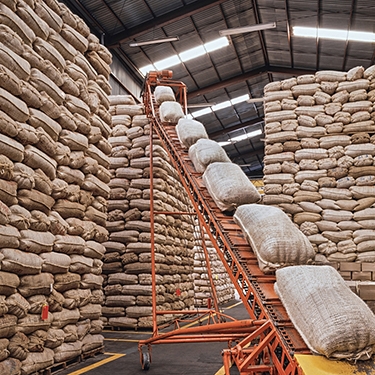
On behalf of a Canadian oilseed processer WPI's team provided market analysis, econometric modeling and financial due diligence in support of a $24 million-dollar investment in a Ukrainian crush plant. Consistent with WPI's findings, local production to supply the plant and the facility's output have expanded exponentially since the investment. WPI has conducted parallel work on behalf of U.S., South American and European clients, both private and public, in the agri-food space.