


Corn This week, the Argentine government confirmed that the sworn export sales declarations (DJVE) will not be extended, unlike the previous administration. Exporters must ship a minimum of 26 MMT by January 2025. Between June, July, and August alone, DJVEs account for 8.7 MMT, with an additional 5.5 MMT from September onward. Exporters have already purchased 19 MMT of the 26 MMT they need to export, with 7 MMT yet to have a set price. They still need to buy a minimum of 7 MMT and receive that - plus all the corn purchased but not yet delivered - at the ports. Even if all that corn is acquired, a significant amount must be sold FOB before producers set their prices. Using the local futures market as a hedge might drive prices up significa...


 Kiwengwa/Pongwe Forest Reserve Kiwengwa/Pongwe Forest Reserve is located on the northeast coast of Unguja, 20 kilometres (12 mi) from the Town. The reserve is an important biodiversity spot in the coral rag zone. The forest reserve is rich both in faunal and floral species. The faunal species r...
 Fabiana is a genus of flowering plants in the nightshade family, native to dry slopes in western South America.[1] They are evergreen shrubs or subshrubs,[1] with needle-like leaves and profuse tiny tubular flowers in summer. The common name is false heath because the leaves superficially resem...
 The Olympic marmot (Marmota olympus) is a rodent in the squirrel family, Sciuridae. It occurs only in the U.S. state of Washington, at the middle elevations of the Olympic Peninsula. The closest relatives of this species are the hoary marmot and the Vancouver Island marmot. In 2009, it was decl...


From WPI Consulting
Infrastructure investment due diligence
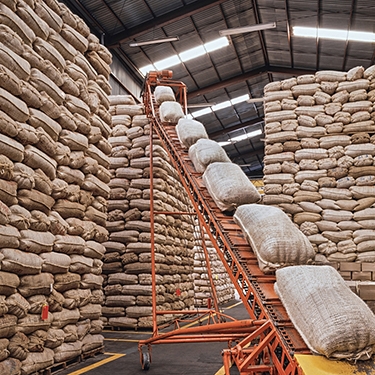
On behalf of a Canadian oilseed processer WPI's team provided market analysis, econometric modeling and financial due diligence in support of a $24 million-dollar investment in a Ukrainian crush plant. Consistent with WPI's findings, local production to supply the plant and the facility's output have expanded exponentially since the investment. WPI has conducted parallel work on behalf of U.S., South American and European clients, both private and public, in the agri-food space.