


The Egyptian government forecasts local aquaculture production, which currently meets 80 percent of the country’s consumption demand, will increase 35 percent by 2018, necessitating notable growth in soybean imports for crushing in order to support the accompanying fish feed requirements. Regional Updates MIDDLE EAST/MEDITERRANEAN COMMENTS The latest USDA-FAS report regarding Turkey indicates its soybean imports will drop 130,000 MT to 2.15 MMT in 2016/17. Ukraine is expected to be the largest supplier at about 800,000 MT with Paraguay at about 550,000 MT and the U.S. at 400,000 MT. Soymeal imports are forecast to be steady at about 600,000 MT with Argentina supplying the highest volume at about 370,000 MT. USDA also says that the expans...


 Kiwengwa/Pongwe Forest Reserve Kiwengwa/Pongwe Forest Reserve is located on the northeast coast of Unguja, 20 kilometres (12 mi) from the Town. The reserve is an important biodiversity spot in the coral rag zone. The forest reserve is rich both in faunal and floral species. The faunal species r...
 Fabiana is a genus of flowering plants in the nightshade family, native to dry slopes in western South America.[1] They are evergreen shrubs or subshrubs,[1] with needle-like leaves and profuse tiny tubular flowers in summer. The common name is false heath because the leaves superficially resem...
 An Ankylosaurus lumbers along the shore of what’s now eastern Montana. Walking low to the ground, the dino uses its flat, leaf-shaped teeth to tear at ferns lining the water. Suddenly, a shadow looms over the herbivore—a Tyrannosaurus rex is hungry. But Ankylosaurus won’t be a...


 The magpie goose (Anseranas semipalmata) is the sole living representative species of the family Anseranatidae. This waterbird is found in northern Australia and southern New Guinea.[2] The species is not truly migratory but it sometimes travels large distances to find food and water, especiall...

From WPI Consulting
Infrastructure investment due diligence
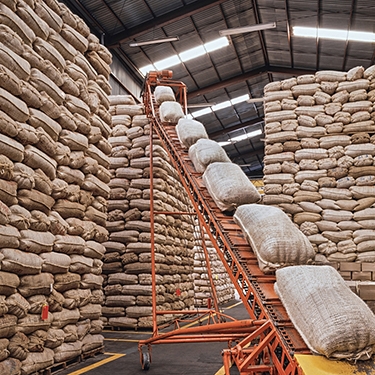
On behalf of a Canadian oilseed processer WPI's team provided market analysis, econometric modeling and financial due diligence in support of a $24 million-dollar investment in a Ukrainian crush plant. Consistent with WPI's findings, local production to supply the plant and the facility's output have expanded exponentially since the investment. WPI has conducted parallel work on behalf of U.S., South American and European clients, both private and public, in the agri-food space.