
Warmer winter weather last year and to date this year is driving higher-than-normal natural gas storage inventories despite demand from the power sector, and two developments may put even more of it on the market to the benefit of the agricultural and fertilizer sectors as well as others.Domestic natural gas production totaled about 73.1 billion cubic feet per day (Bcf/d) for the first eight months of 2016, 1.3 Bcf/d less than during the same period last year. Nonetheless, the U.S. Energy Information Administration (EIA) indicates natural gas in storage reached a record 4,017 Bcf as of 4 November, and that total is now higher. Generally, inventories have been greater than the five-year average for 48 of the past 52 weeks and are currently u...



 content here...

 A pika (/ˈpaɪkə, ˈpiːkə/ PY-kə, PEE-kə[3][4]) is a small, mountain-dwelling mammal native to Asia and North America. With short limbs, a very round body, an even coat of fur, and no external tail, they resemble their close relative the rabbit, but with short, rounded ears.[5] The large-eared pi...

 Kolkwitzia amabilis /kɒlˈkwɪtsiə əˈmæbɪlɪs/,[2] commonly known as beauty bush, is a species of flowering plant in the family Caprifoliaceae. It is the sole species in genus Kolkwitzia.[1] It is a deciduous shrub grown as an ornamental plant. In China, where it originated, the plant is cal...
 Gloriosa is a genus of 12 species in the plant family Colchicaceae, and includes the formerly recognised genus Littonia. They are native in tropical and southern Africa to Asia, and naturalised in Australia and the Pacific as well as being widely cultivated.[3] The most common English names are...

From WPI Consulting
Infrastructure investment due diligence
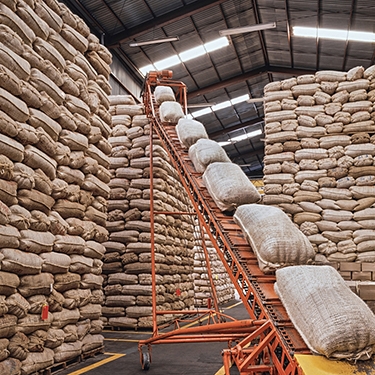
On behalf of a Canadian oilseed processer WPI's team provided market analysis, econometric modeling and financial due diligence in support of a $24 million-dollar investment in a Ukrainian crush plant. Consistent with WPI's findings, local production to supply the plant and the facility's output have expanded exponentially since the investment. WPI has conducted parallel work on behalf of U.S., South American and European clients, both private and public, in the agri-food space.