
On 28 June, the Supreme Court issued its decision in Loper Bright Enterprises v. Raimondo (Secretary of Commerce) case, which could have significant impacts on federal regulatory policy moving forward as it overruled the so-called “Chevron deference” in place for the past 40 years. At issue is regulatory agencies’ limits on interpreting Congressional and statutory intent. Specifically, the case was brought under the 1976 Magnuson-Stevens Fishery Conservation and Management Act (FCMA). That statute authorizes standards for fishing off the coast of the United States. To ensure that those standards are followed, vessels may be required to carry an “observer” who monitors their fishing activity, and absorb the cos...



 A pika (/ˈpaɪkə, ˈpiːkə/ PY-kə, PEE-kə[3][4]) is a small, mountain-dwelling mammal native to Asia and North America. With short limbs, a very round body, an even coat of fur, and no external tail, they resemble their close relative the rabbit, but with short, rounded ears.[5] The large-eared pi...


 Lobelia (/loʊˈbiːliə, lə-/[4][5][6]) is a genus of flowering plants in the family Campanulaceae comprising 415 species,[7] with a subcosmopolitan distribution primarily in tropical to warm temperate regions of the world, a few species extending into cooler temperate regions.[8] They are known g...

 Text. More random text. Lots and lots of text. Just to fill out the article. Lore ipsum or whatever the hell it is. Lore ipsum or whatever the hell it is. Lore ipsum or whatever the hell it is. Lore ipsum or whatever the hell it is. Lore ipsum or whatever the hell it is. Lore ipsum or whatever...

From WPI Consulting
Forecasting developments in production agriculture
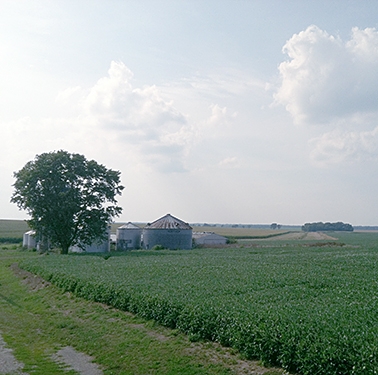
On behalf of a private U.S. agricultural technology provider, WPI’s team generated an econometric model to forecast the movement of concentrated corn production north and west from the traditional U.S. Corn Belt. WPI’s model has subsequently provided quantitative support to a multi-million-dollar investment into short-season corn variety development. WPI’s methodology included a series of interviews with regional grain elevators and seed consultants. Emphasizing outreach and communication with stakeholders who possess intimate sectoral knowledge – on-the-ground insights – is a regular component of WPI’s methodologies, made possible by WPI’s ever-growing network of industry contacts.