
Novel and Magnanimous Ukraine has 20 MMT of grain that need to be exported over the next three months before the next crop comes off the fields and needs a place to be stored. Without access to its ports, its current export capacity is 1.5 MMT/month. With hoped-for production this summer of an additional 30-40 MMT of commodities, there is a lot of food trying to squeeze through a rickety, old, land-based transportation network with conflicting standards. The EU proposed this week the creation of “solidarity lanes” whereby governing authorities would coordinate efforts to remove bottlenecks to Ukraine’s exports. On the one hand, boosting Ukrainian exports will lower EU farmer returns. But on the other it will reduce the le...



 content here...

 A pika (/ˈpaɪkə, ˈpiːkə/ PY-kə, PEE-kə[3][4]) is a small, mountain-dwelling mammal native to Asia and North America. With short limbs, a very round body, an even coat of fur, and no external tail, they resemble their close relative the rabbit, but with short, rounded ears.[5] The large-eared pi...
 Gloriosa is a genus of 12 species in the plant family Colchicaceae, and includes the formerly recognised genus Littonia. They are native in tropical and southern Africa to Asia, and naturalised in Australia and the Pacific as well as being widely cultivated.[3] The most common English names are...
 Lobelia (/loʊˈbiːliə, lə-/[4][5][6]) is a genus of flowering plants in the family Campanulaceae comprising 415 species,[7] with a subcosmopolitan distribution primarily in tropical to warm temperate regions of the world, a few species extending into cooler temperate regions.[8] They are known g...

From WPI Consulting
Infrastructure investment due diligence
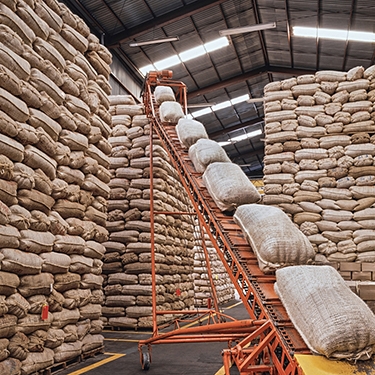
On behalf of a Canadian oilseed processer WPI's team provided market analysis, econometric modeling and financial due diligence in support of a $24 million-dollar investment in a Ukrainian crush plant. Consistent with WPI's findings, local production to supply the plant and the facility's output have expanded exponentially since the investment. WPI has conducted parallel work on behalf of U.S., South American and European clients, both private and public, in the agri-food space.