
Rabobank reports that over $2 billion is being invested to expand North American oilseed crush capacity. Part will be to support the expansion in biodiesel but overall oilseed demand remains strong. While the world’s population grows at an annual rate of 1.1 percent, global trade in vegetable oil is increasing at nearly 3 percent and vegetable meal exports expand 2.2 percent each year. Palm oil dominates vegetable oil demand, supplying 57 percent of globally trade oils. The trade in sunoil is small by comparison but has grown the fastest with a 138 percent increase over the past decade. Meanwhile, soymeal dominates the trade in protein meals, holding a 71 percent global market share. The trade in peanut meal is relatively puny...



 content here...
 Fabiana is a genus of flowering plants in the nightshade family, native to dry slopes in western South America.[1] They are evergreen shrubs or subshrubs,[1] with needle-like leaves and profuse tiny tubular flowers in summer. The common name is false heath because the leaves superficially resem...

 The magpie goose (Anseranas semipalmata) is the sole living representative species of the family Anseranatidae. This waterbird is found in northern Australia and southern New Guinea.[2] The species is not truly migratory but it sometimes travels large distances to find food and water, especiall...
 A pika (/ˈpaɪkə, ˈpiːkə/ PY-kə, PEE-kə[3][4]) is a small, mountain-dwelling mammal native to Asia and North America. With short limbs, a very round body, an even coat of fur, and no external tail, they resemble their close relative the rabbit, but with short, rounded ears.[5] The large-eared pi...

From WPI Consulting
Forecasting developments in production agriculture
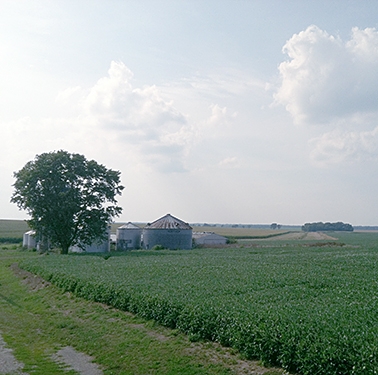
On behalf of a private U.S. agricultural technology provider, WPI’s team generated an econometric model to forecast the movement of concentrated corn production north and west from the traditional U.S. Corn Belt. WPI’s model has subsequently provided quantitative support to a multi-million-dollar investment into short-season corn variety development. WPI’s methodology included a series of interviews with regional grain elevators and seed consultants. Emphasizing outreach and communication with stakeholders who possess intimate sectoral knowledge – on-the-ground insights – is a regular component of WPI’s methodologies, made possible by WPI’s ever-growing network of industry contacts.