


Brazil's CONAB Surprisingly Raises Soybean Forecast The Brazilian crop supply agency (CONAB) today raised its forecast for Brazil's 2012 soybean crop by 0.7 percent from its December forecast to 71.75 MMT. The forecast is 4.7 percent below production in 2011.The increase was a surprise, considering southern Brazil has been plagued by drought this year. It has been very dry in the states of Rio Parana and Grande do Sul, the second and third-largest producing states after Mato Grosso. I am seeing reports claiming that parts of the region are expecting yields to be down by as much as 40 percent. Some of the areas in the two states planted were earlier than normal and the current dryness is having a major impact on yields. It has been very d...


 Kiwengwa/Pongwe Forest Reserve Kiwengwa/Pongwe Forest Reserve is located on the northeast coast of Unguja, 20 kilometres (12 mi) from the Town. The reserve is an important biodiversity spot in the coral rag zone. The forest reserve is rich both in faunal and floral species. The faunal species r...


 content here...
 Fabiana is a genus of flowering plants in the nightshade family, native to dry slopes in western South America.[1] They are evergreen shrubs or subshrubs,[1] with needle-like leaves and profuse tiny tubular flowers in summer. The common name is false heath because the leaves superficially resem...

 A pika (/ˈpaɪkə, ˈpiːkə/ PY-kə, PEE-kə[3][4]) is a small, mountain-dwelling mammal native to Asia and North America. With short limbs, a very round body, an even coat of fur, and no external tail, they resemble their close relative the rabbit, but with short, rounded ears.[5] The large-eared pi...

From WPI Consulting
Infrastructure investment due diligence
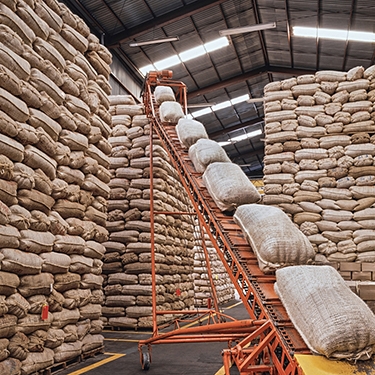
On behalf of a Canadian oilseed processer WPI's team provided market analysis, econometric modeling and financial due diligence in support of a $24 million-dollar investment in a Ukrainian crush plant. Consistent with WPI's findings, local production to supply the plant and the facility's output have expanded exponentially since the investment. WPI has conducted parallel work on behalf of U.S., South American and European clients, both private and public, in the agri-food space.