


NOPA April Crush Report Shows Expected Big Decline Yesterday's NOPA crush report for April 2013 shows that its members sharply reduced their soybean crush as expected. The report indicates NOPA's members crushed 120.113 million bushels (3.269 MMT) of soybeans last month. That was a decline of 12.4 percent from March and 8.8 percent below crush volume in April 2012. The average meal yield in April was 47.64 pounds/bushel (79.4 percent) and the average oil yield was 11.85 pounds/bushel (19.8 percent). The oil yield was down from last month, when it reached 30-year record of 11.94 pounds/bushel (19.9 percent), but well above the April 2012 yield of 11.54 pounds/bushel (19.2 percent). The decline this month was a bit of a surprise considerin...


 ZanzibarMnemba Marine Parksouthern cassowary Mnemba Marine Park is located 10 kilometres (6 mi) from Stone Town and forms part of the northeastern Unguja Island. A marine reserve and atoll, its shallow stretch of coral reef is in the shape of an oval. It is located between Matemwe and Nungwi, w...


 content here...
 Fabiana is a genus of flowering plants in the nightshade family, native to dry slopes in western South America.[1] They are evergreen shrubs or subshrubs,[1] with needle-like leaves and profuse tiny tubular flowers in summer. The common name is false heath because the leaves superficially resem...

 The magpie goose (Anseranas semipalmata) is the sole living representative species of the family Anseranatidae. This waterbird is found in northern Australia and southern New Guinea.[2] The species is not truly migratory but it sometimes travels large distances to find food and water, especiall...

From WPI Consulting
Infrastructure investment due diligence
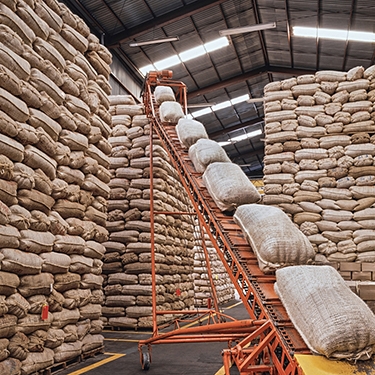
On behalf of a Canadian oilseed processer WPI's team provided market analysis, econometric modeling and financial due diligence in support of a $24 million-dollar investment in a Ukrainian crush plant. Consistent with WPI's findings, local production to supply the plant and the facility's output have expanded exponentially since the investment. WPI has conducted parallel work on behalf of U.S., South American and European clients, both private and public, in the agri-food space.