


Even with soybeans offering a better profit opportunity, U.S. farmers seem to favor another crop, much like their counterparts in Argentina apparently do. Increase in Soybean Plantings Not as Expected Today’s USDA crop plantings report indicated U.S. farmers planted 83.688 million acres of soybeans this year, a 1.7 percent increase over its March estimate of 82.236 million acres. However, the number was below the average estimate of analysts surveyed by Reuters of 83.834 million acres. Soybean plantings were not any greater because USDA found U.S. farmers raised their corn plantings by 547,000 acres over the March estimate to 94.148 million acres. The average estimate of analysts was for 92.896 million acres,This year’s U.S. soybean plant...


 Kiwengwa/Pongwe Forest Reserve Kiwengwa/Pongwe Forest Reserve is located on the northeast coast of Unguja, 20 kilometres (12 mi) from the Town. The reserve is an important biodiversity spot in the coral rag zone. The forest reserve is rich both in faunal and floral species. The faunal species r...
 Fabiana is a genus of flowering plants in the nightshade family, native to dry slopes in western South America.[1] They are evergreen shrubs or subshrubs,[1] with needle-like leaves and profuse tiny tubular flowers in summer. The common name is false heath because the leaves superficially resem...

 The magpie goose (Anseranas semipalmata) is the sole living representative species of the family Anseranatidae. This waterbird is found in northern Australia and southern New Guinea.[2] The species is not truly migratory but it sometimes travels large distances to find food and water, especiall...
 The common ostrich (Struthio camelus), or simply ostrich, is a species of flightless bird native to certain areas of Africa (and historically, Arabia) and is the largest living species of bird. The common ostrich is one of two extant species of ostriches, the only living members of the genus St...

From WPI Consulting
Infrastructure investment due diligence
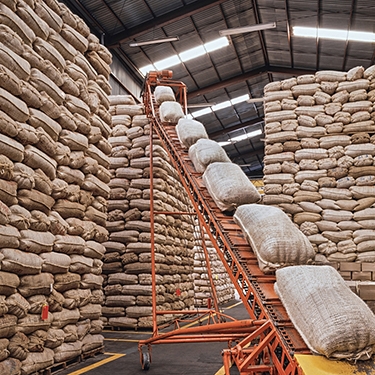
On behalf of a Canadian oilseed processer WPI's team provided market analysis, econometric modeling and financial due diligence in support of a $24 million-dollar investment in a Ukrainian crush plant. Consistent with WPI's findings, local production to supply the plant and the facility's output have expanded exponentially since the investment. WPI has conducted parallel work on behalf of U.S., South American and European clients, both private and public, in the agri-food space.