

The Market If it is better to be lucky than good, it is better to close higher even if only barely. July soybeans rose a half-penny this week or 0.04 percent and ended at 1179.75/bushel. In the same vein, July soyoil gained 5/100 of a penny or 0.1 percent in value to end the week at 43.68/pound. Soymeal remains the darling, adding $7.70 or 2.1 percent to hold value at 368.4/ST. Three days of flash sales with over 300 KMT of old soybeans designated to China or unknown no doubt helped. U.S. beans got another boost from a Brazilian tax penalty that made North American supplies more attractive. A good start to the growing season applies downward pressure but speculators will quickly reduce their net short position if it stays hot and dry the r...


 Fabiana is a genus of flowering plants in the nightshade family, native to dry slopes in western South America.[1] They are evergreen shrubs or subshrubs,[1] with needle-like leaves and profuse tiny tubular flowers in summer. The common name is false heath because the leaves superficially resem...

 A pika (/ˈpaɪkə, ˈpiːkə/ PY-kə, PEE-kə[3][4]) is a small, mountain-dwelling mammal native to Asia and North America. With short limbs, a very round body, an even coat of fur, and no external tail, they resemble their close relative the rabbit, but with short, rounded ears.[5] The large-eared pi...


 Lobelia (/loʊˈbiːliə, lə-/[4][5][6]) is a genus of flowering plants in the family Campanulaceae comprising 415 species,[7] with a subcosmopolitan distribution primarily in tropical to warm temperate regions of the world, a few species extending into cooler temperate regions.[8] They are known g...

From WPI Consulting
Infrastructure investment due diligence
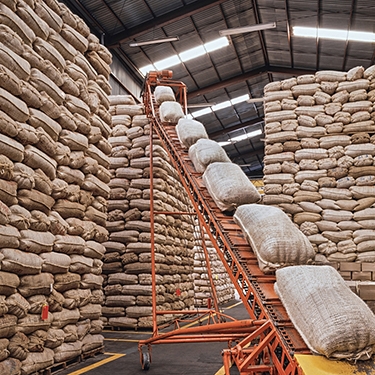
On behalf of a Canadian oilseed processer WPI's team provided market analysis, econometric modeling and financial due diligence in support of a $24 million-dollar investment in a Ukrainian crush plant. Consistent with WPI's findings, local production to supply the plant and the facility's output have expanded exponentially since the investment. WPI has conducted parallel work on behalf of U.S., South American and European clients, both private and public, in the agri-food space.