
Soybean Exporters Realigning Sales/Shipments Due to Possible Chinese Tariff China’s announcement that it will impose a 25 percent tariff on U.S. soybeans if the U.S. applies a similar tariff on imports from that country has caused soybean importers and exporters to quickly realign sales and shipments. Since last Friday, USDA has announced sales to unknown destinations of 838,500 MT for shipment in 2017/18 and 131,000 MT for shipment in 2018/19. Trade sources indicate a large share of these sales are destined to Europe with the exact country not yet determined. In some cases, European importers may have chosen to source from the U.S. rather than Brazil because of the approximate $10-20/MT discount . However, other sales were likely a...



 content here...
 Fabiana is a genus of flowering plants in the nightshade family, native to dry slopes in western South America.[1] They are evergreen shrubs or subshrubs,[1] with needle-like leaves and profuse tiny tubular flowers in summer. The common name is false heath because the leaves superficially resem...

 A pika (/ˈpaɪkə, ˈpiːkə/ PY-kə, PEE-kə[3][4]) is a small, mountain-dwelling mammal native to Asia and North America. With short limbs, a very round body, an even coat of fur, and no external tail, they resemble their close relative the rabbit, but with short, rounded ears.[5] The large-eared pi...
 Gloriosa is a genus of 12 species in the plant family Colchicaceae, and includes the formerly recognised genus Littonia. They are native in tropical and southern Africa to Asia, and naturalised in Australia and the Pacific as well as being widely cultivated.[3] The most common English names are...

From WPI Consulting
Infrastructure investment due diligence
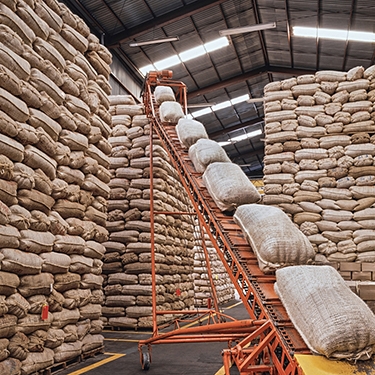
On behalf of a Canadian oilseed processer WPI's team provided market analysis, econometric modeling and financial due diligence in support of a $24 million-dollar investment in a Ukrainian crush plant. Consistent with WPI's findings, local production to supply the plant and the facility's output have expanded exponentially since the investment. WPI has conducted parallel work on behalf of U.S., South American and European clients, both private and public, in the agri-food space.