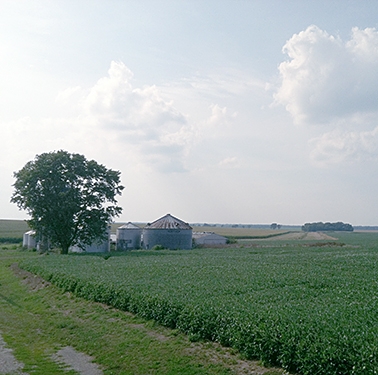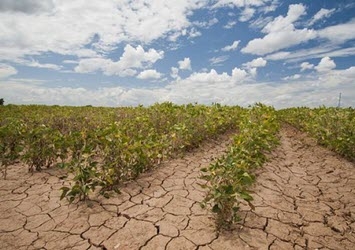
Production At a critical time when the world needs more oilseeds, humans and Mother Nature are conspiring against it. Excessively wet conditions have delayed planting in the U.S. Notably, planting is 15 percent behind in some of the major producing states. The impact is that yield forecasts are already beginning to decline, as are private estimates of the final planted acres. USDA’s Prospective Plantings survey at the end of March suggested 91 million acres of soybeans but some believe at least 1 million acres will not get planted due to the sub-optimal conditions.
Meanwhile, the EU forecasts a 7 percent increase in oilseed production in 2022/23, but now drought conditions could cut that estimate. Drought also afflicts weste...


 Fabiana is a genus of flowering plants in the nightshade family, native to dry slopes in western South America.[1] They are evergreen shrubs or subshrubs,[1] with needle-like leaves and profuse tiny tubular flowers in summer. The common name is false heath because the leaves superficially resem...

 A pika (/ˈpaɪkə, ˈpiːkə/ PY-kə, PEE-kə[3][4]) is a small, mountain-dwelling mammal native to Asia and North America. With short limbs, a very round body, an even coat of fur, and no external tail, they resemble their close relative the rabbit, but with short, rounded ears.[5] The large-eared pi...


 Lobelia (/loʊˈbiːliə, lə-/[4][5][6]) is a genus of flowering plants in the family Campanulaceae comprising 415 species,[7] with a subcosmopolitan distribution primarily in tropical to warm temperate regions of the world, a few species extending into cooler temperate regions.[8] They are known g...