
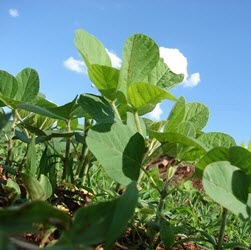
The U.S. soybean industry has long been a success story. The industry was a modest one prior to World War II but saw amazing growth after the war as consumers shifted to using vegoils instead of lard and tallow for cooking. Its growth also was driven by use of soymeal as the main protein source in swine and poultry feeds. This all was made possible by the invention and proliferation of solvent extraction facilities that allowed the efficient separation of soymeal and soyoil. At the same time U.S. demand for soymeal and soyoil was expanding in the U.S. it also was expanding in Europe, Japan, Taiwan and elsewhere. This allowed the U.S. soybean industry to develop robust export markets for soybeans, soymeal and soyoil and to be by...


 Fabiana is a genus of flowering plants in the nightshade family, native to dry slopes in western South America.[1] They are evergreen shrubs or subshrubs,[1] with needle-like leaves and profuse tiny tubular flowers in summer. The common name is false heath because the leaves superficially resem...

 A pika (/ˈpaɪkə, ˈpiːkə/ PY-kə, PEE-kə[3][4]) is a small, mountain-dwelling mammal native to Asia and North America. With short limbs, a very round body, an even coat of fur, and no external tail, they resemble their close relative the rabbit, but with short, rounded ears.[5] The large-eared pi...


 Lobelia (/loʊˈbiːliə, lə-/[4][5][6]) is a genus of flowering plants in the family Campanulaceae comprising 415 species,[7] with a subcosmopolitan distribution primarily in tropical to warm temperate regions of the world, a few species extending into cooler temperate regions.[8] They are known g...

From WPI Consulting
Infrastructure investment due diligence
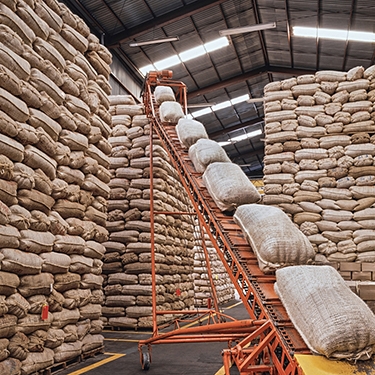
On behalf of a Canadian oilseed processer WPI's team provided market analysis, econometric modeling and financial due diligence in support of a $24 million-dollar investment in a Ukrainian crush plant. Consistent with WPI's findings, local production to supply the plant and the facility's output have expanded exponentially since the investment. WPI has conducted parallel work on behalf of U.S., South American and European clients, both private and public, in the agri-food space.