If U.S. agriculture fails to achieve great inroads into the Japanese market via the Trans-Pacific Partnership (TPP), it can thank American automakers. Capitol Optimism Sentiment in the U.S. Capitol has swung from visceral partisanship to mild optimism. Conferees on a new farm bill left a meeting today noting "great progress." Meanwhile, some of the negotiators on a new budget agreement were also expressing cautious optimism, apparently seeing the possibility of a deal that would supplant the widely disliked automatic sequester cuts. Legislation is not made on a single day's optimism, but it is a notable turn of events. On the farm bill, commodity group lobbyists appeared to have been reigned in from the aggressive effort in defending a sh...



 The magpie goose (Anseranas semipalmata) is the sole living representative species of the family Anseranatidae. This waterbird is found in northern Australia and southern New Guinea.[2] The species is not truly migratory but it sometimes travels large distances to find food and water, especiall...
 A pika (/ˈpaɪkə, ˈpiːkə/ PY-kə, PEE-kə[3][4]) is a small, mountain-dwelling mammal native to Asia and North America. With short limbs, a very round body, an even coat of fur, and no external tail, they resemble their close relative the rabbit, but with short, rounded ears.[5] The large-eared pi...

 Lobelia (/loʊˈbiːliə, lə-/[4][5][6]) is a genus of flowering plants in the family Campanulaceae comprising 415 species,[7] with a subcosmopolitan distribution primarily in tropical to warm temperate regions of the world, a few species extending into cooler temperate regions.[8] They are known g...

From WPI Consulting
Infrastructure investment due diligence
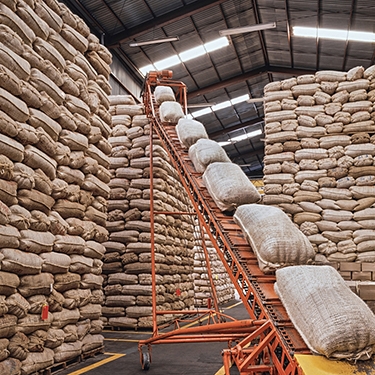
On behalf of a Canadian oilseed processer WPI's team provided market analysis, econometric modeling and financial due diligence in support of a $24 million-dollar investment in a Ukrainian crush plant. Consistent with WPI's findings, local production to supply the plant and the facility's output have expanded exponentially since the investment. WPI has conducted parallel work on behalf of U.S., South American and European clients, both private and public, in the agri-food space.