
As expected, last Friday the EPA published its final rule to allow year-round E15 sales. That rule included a much scaled-down proposal regarding the trading and holding of Renewable Identification Numbers (RINs), which the agency said is a way to increases transparency to deter price manipulation. This is one of the EPA’s original four proposals on RINs. Obligated parties will be required to report on a quarterly basis both their separated RIN holdings, provided those holdings exceed 3 percent of the party’s implied Required Volume Obligation (RVO), as well as their RIN inventory measured against 130 percent of their total implied conventional renewable fuel obligation. The reporting would be limited to a simple “yes&rdq...


 ZanzibarMnemba Marine Parksouthern cassowary Mnemba Marine Park is located 10 kilometres (6 mi) from Stone Town and forms part of the northeastern Unguja Island. A marine reserve and atoll, its shallow stretch of coral reef is in the shape of an oval. It is located between Matemwe and Nungwi, w...


 content here...

 The magpie goose (Anseranas semipalmata) is the sole living representative species of the family Anseranatidae. This waterbird is found in northern Australia and southern New Guinea.[2] The species is not truly migratory but it sometimes travels large distances to find food and water, especiall...
 A pika (/ˈpaɪkə, ˈpiːkə/ PY-kə, PEE-kə[3][4]) is a small, mountain-dwelling mammal native to Asia and North America. With short limbs, a very round body, an even coat of fur, and no external tail, they resemble their close relative the rabbit, but with short, rounded ears.[5] The large-eared pi...

From WPI Consulting
Infrastructure investment due diligence
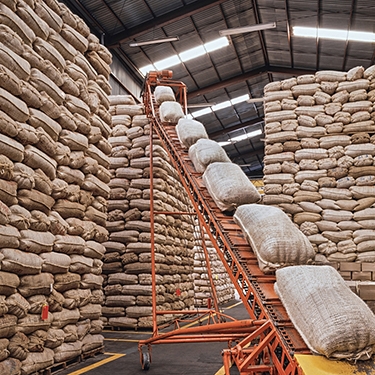
On behalf of a Canadian oilseed processer WPI's team provided market analysis, econometric modeling and financial due diligence in support of a $24 million-dollar investment in a Ukrainian crush plant. Consistent with WPI's findings, local production to supply the plant and the facility's output have expanded exponentially since the investment. WPI has conducted parallel work on behalf of U.S., South American and European clients, both private and public, in the agri-food space.